📩 Платимо за новини! Звертайтеся: info@bukovinalife.info
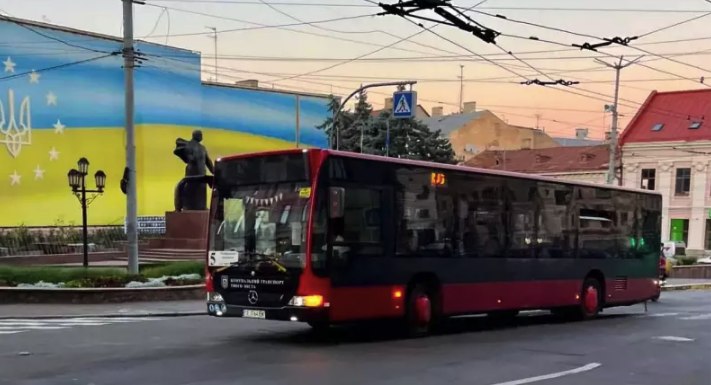
⚪️ In Chernivtsi, students can't fit into bus No. 5 every morning
Society

⚪️ In Chernivtsi, students can't fit into bus No. 5 every morning

⚪️ In Chernivtsi, every morning students cannot fit on bus No. 5 In Chernivtsi, every morning students cannot fit on bus No. 5 📡 Chernivtsi Promin...
👁 540 2026-10-30
A Divided Legacy: How One Bukovyna Became Two Worlds — With UNESCO Frescoes on One Side of the Border and Heating Pads on the Other
Society

A Divided Legacy: How One Bukovyna Became Two Worlds — With UNESCO Frescoes on One Side of the Border and Heating Pads on the Other

Bukovina is a single cultural organism, carved up in 1940 by a line drawn in pencil by the Wiehl commission at the direction of two dictators. The southern half holds the fortress-monasteries of Voron...
👁 206 2026-10-30
The Dark Half of Bukovina: Life in a Region Europe Sees Only Through the Crosshairs of the 1940 Border

Modern Northern Bukovina is no accident of history. The current northern part of the region belonged to Romania for centuries until 1940, when, under the Molotov-Ribbentrop Pact, the Soviet Union issued an ultimatum to Bucharest demanding the cession of this territory, along with Bessarabia and the Hertsa region. Romania, having no real support from its Western allies, was forced to comply. Thus, Northern Bukovina — including Chernivtsi, the region's historic capital — became part of the Ukrainian SSR.

What the border of 1940 actually divided. Contrary to the Soviet narrative of "reuniting" the Ukrainian population, the new line on the map cut through a cohesive region. Northern Bukovina was home not only to Ukrainians and Romanians, but also to significant Jewish, German, and Polish communities. Chernivtsi itself was one of the most multicultural cities in Eastern Europe — a place where, in the early 20th century, Romanian, German, Ukrainian, and Yiddish were heard on the same streets. The southern part, which remained with Romania, preserved its Romanian identity but lost its economic and cultural heart.

The Romanian perspective. In Romania, the events of 1940 are remembered as a national tragedy, and the loss of Northern Bukovina remains a sensitive political topic. Periodically, ultranationalist circles raise the question of "returning the territories," though official Bucharest does not dispute the current borders and supports Ukraine's territorial integrity, especially after Russia's full-scale invasion in 2022.

Everyday life of the divided region. For ordinary people on both sides of the Prut and the border, history is not just textbook pages but a daily reality. Families were split: relatives often ended up in different states without any possibility of communication for decades. During the Cold War, the Soviet-Romanian border was one of the most closed in Europe. It was only after Ukraine's independence and Romania's accession to the EU that contacts gradually revived — but the border regime, especially after Romania joined the Schengen Area, again created barriers invisible on the map but tangible for local residents.

The war has added new divides. After Russia's full-scale invasion, Northern Bukovina found itself in a paradoxical situation: a region that is part of Ukraine and shares the burden of war — refugees, mobilization, economic hardship — simultaneously feels the historical pull toward the European side of the border, which has now become the frontier of the EU. Many locals have Romanian passports, which allow them to travel and work in Europe, deepening the contrast between "here" and "there."

Why this matters for all of Europe. The story of Bukovina is a story about how the borders drawn by totalitarian regimes in the 20th century continue to shape people's fates decades later. It is also a reminder that European integration is not only about institutions but about reuniting what history has torn apart. The "dark half" of Bukovina lives, works, and hopes — even if Europe often notices it only through the crosshairs of old border lines on the map.
Society

The Dark Half of Bukovina: Life in a Region Europe Sees Only Through the Crosshairs of the 1940 Border Modern Northern Bukovina is no accident of history. The current northern part of the region belonged to Romania for centuries until 1940, when, under the Molotov-Ribbentrop Pact, the Soviet Union issued an ultimatum to Bucharest demanding the cession of this territory, along with Bessarabia and the Hertsa region. Romania, having no real support from its Western allies, was forced to comply. Thus, Northern Bukovina — including Chernivtsi, the region's historic capital — became part of the Ukrainian SSR. What the border of 1940 actually divided. Contrary to the Soviet narrative of "reuniting" the Ukrainian population, the new line on the map cut through a cohesive region. Northern Bukovina was home not only to Ukrainians and Romanians, but also to significant Jewish, German, and Polish communities. Chernivtsi itself was one of the most multicultural cities in Eastern Europe — a place where, in the early 20th century, Romanian, German, Ukrainian, and Yiddish were heard on the same streets. The southern part, which remained with Romania, preserved its Romanian identity but lost its economic and cultural heart. The Romanian perspective. In Romania, the events of 1940 are remembered as a national tragedy, and the loss of Northern Bukovina remains a sensitive political topic. Periodically, ultranationalist circles raise the question of "returning the territories," though official Bucharest does not dispute the current borders and supports Ukraine's territorial integrity, especially after Russia's full-scale invasion in 2022. Everyday life of the divided region. For ordinary people on both sides of the Prut and the border, history is not just textbook pages but a daily reality. Families were split: relatives often ended up in different states without any possibility of communication for decades. During the Cold War, the Soviet-Romanian border was one of the most closed in Europe. It was only after Ukraine's independence and Romania's accession to the EU that contacts gradually revived — but the border regime, especially after Romania joined the Schengen Area, again created barriers invisible on the map but tangible for local residents. The war has added new divides. After Russia's full-scale invasion, Northern Bukovina found itself in a paradoxical situation: a region that is part of Ukraine and shares the burden of war — refugees, mobilization, economic hardship — simultaneously feels the historical pull toward the European side of the border, which has now become the frontier of the EU. Many locals have Romanian passports, which allow them to travel and work in Europe, deepening the contrast between "here" and "there." Why this matters for all of Europe. The story of Bukovina is a story about how the borders drawn by totalitarian regimes in the 20th century continue to shape people's fates decades later. It is also a reminder that European integration is not only about institutions but about reuniting what history has torn apart. The "dark half" of Bukovina lives, works, and hopes — even if Europe often notices it only through the crosshairs of old border lines on the map.

While Chernivtsi counts the hours without electricity and raises money for victims of scammers, a hundred kilometers to the south, in Suceava County, nobody even knows what a power outage schedule is....
👁 194 2026-10-30
A Line Drawn by Two Dictators: Why Bukovina Still Pays for the Molotov-Ribbentrop Pact

On August 23, 1939, the foreign ministers of Nazi Germany and the Soviet Union, Joachim von Ribbentrop and Vyacheslav Molotov, signed a non-aggression treaty in Moscow. Its secret protocols divided Eastern Europe into spheres of influence, and among the territories the Kremlin claimed was northern Bukovina — a region that had never belonged to the Russian Empire.

For the residents of Chernivtsi and the surrounding villages, this meant that overnight they found themselves on the wrong side of a border drawn without their consent. Families were separated, and local identities that had coexisted for centuries — Ukrainian, Romanian, German, Jewish, Polish — were suddenly subordinated to geopolitical bargaining.

## A Region at the Crossroads of Empires

Bukovina had long been a borderland where cultures and empires met. Part of the Principality of Moldavia, it came under Habsburg rule in 1775 and remained within Austria-Hungary until 1918, when it joined Romania. Under Austrian administration, Chernivtsi — the region's capital — flourished as a genuinely multicultural city, often compared with Vienna or Prague for its rich intellectual life.

But the geopolitics of the twentieth century treated Bukovina as a mere pawn. In June 1940, following an ultimatum backed by the secret protocols of the Molotov-Ribbentrop Pact, Soviet troops entered northern Bukovina. Romania, isolated and militarily outmatched, was forced to withdraw. The territory was annexed by the USSR, and its fate was sealed for the next half-century.

## Occupation, Deportation, War

The Soviet takeover brought immediate repression. In just a few days in 1940, tens of thousands of people were deported to remote regions of the USSR — former officials, police officers, businessmen, landowners, and members of intelligentsia, along with their families. Many never returned.

Then came 1941. Romania, now allied with Nazi Germany, retook the region and, together with German forces, carried out its own wave of terror: mass deportations of the Jewish population to Transnistria, where most perished. Chernivtsi, once a symbol of multicultural coexistence, lost the overwhelming majority of its Jewish community — one of the most vibrant in Eastern Europe.

In 1944, the Red Army returned, and the Soviet border was redrawn once again — this time permanently. Northern Bukovina became part of the Ukrainian SSR, while the southern part remained with Romania, divided by a line that still exists on the map today as the Ukrainian-Romanian border.

## The Long Shadow of the Secret Protocols

Although the USSR collapsed in 1991, the consequences of the Molotov-Ribbentrop Pact did not vanish with it. Independent Ukraine inherited the borders shaped by two dictators' collusion, and Bukovina inherited a divided identity, broken family ties, and the trauma of successive occupations.

For decades, the region's history was manipulated. Soviet historiography portrayed the 1940 annexation as a "liberation" and a "reunification of the Ukrainian people," erasing the fact that Bukovina had never been part of Russia. In Romania, meanwhile, the loss of the region was long treated as an injustice, fueling mutual grievances on both sides of the border.

## Reckoning with the Past

Today, historians in both Ukraine and Romania are working to reclaim the true history of Bukovina — free from Soviet myths and nationalist narratives. Archives are opening, memorial plaques are appearing, and the stories of deportees and Holocaust survivors are finally being documented.

Understanding that the current map of Eastern Europe was drawn not by the free will of its peoples, but by the secret agreements of dictators, is essential. Only such understanding allows us to see Bukovina not as a disputed trophy, but as a land of people whose fate was decided without them — and whose memory deserves respect.
Society

A Line Drawn by Two Dictators: Why Bukovina Still Pays for the Molotov-Ribbentrop Pact On August 23, 1939, the foreign ministers of Nazi Germany and the Soviet Union, Joachim von Ribbentrop and Vyacheslav Molotov, signed a non-aggression treaty in Moscow. Its secret protocols divided Eastern Europe into spheres of influence, and among the territories the Kremlin claimed was northern Bukovina — a region that had never belonged to the Russian Empire. For the residents of Chernivtsi and the surrounding villages, this meant that overnight they found themselves on the wrong side of a border drawn without their consent. Families were separated, and local identities that had coexisted for centuries — Ukrainian, Romanian, German, Jewish, Polish — were suddenly subordinated to geopolitical bargaining. ## A Region at the Crossroads of Empires Bukovina had long been a borderland where cultures and empires met. Part of the Principality of Moldavia, it came under Habsburg rule in 1775 and remained within Austria-Hungary until 1918, when it joined Romania. Under Austrian administration, Chernivtsi — the region's capital — flourished as a genuinely multicultural city, often compared with Vienna or Prague for its rich intellectual life. But the geopolitics of the twentieth century treated Bukovina as a mere pawn. In June 1940, following an ultimatum backed by the secret protocols of the Molotov-Ribbentrop Pact, Soviet troops entered northern Bukovina. Romania, isolated and militarily outmatched, was forced to withdraw. The territory was annexed by the USSR, and its fate was sealed for the next half-century. ## Occupation, Deportation, War The Soviet takeover brought immediate repression. In just a few days in 1940, tens of thousands of people were deported to remote regions of the USSR — former officials, police officers, businessmen, landowners, and members of intelligentsia, along with their families. Many never returned. Then came 1941. Romania, now allied with Nazi Germany, retook the region and, together with German forces, carried out its own wave of terror: mass deportations of the Jewish population to Transnistria, where most perished. Chernivtsi, once a symbol of multicultural coexistence, lost the overwhelming majority of its Jewish community — one of the most vibrant in Eastern Europe. In 1944, the Red Army returned, and the Soviet border was redrawn once again — this time permanently. Northern Bukovina became part of the Ukrainian SSR, while the southern part remained with Romania, divided by a line that still exists on the map today as the Ukrainian-Romanian border. ## The Long Shadow of the Secret Protocols Although the USSR collapsed in 1991, the consequences of the Molotov-Ribbentrop Pact did not vanish with it. Independent Ukraine inherited the borders shaped by two dictators' collusion, and Bukovina inherited a divided identity, broken family ties, and the trauma of successive occupations. For decades, the region's history was manipulated. Soviet historiography portrayed the 1940 annexation as a "liberation" and a "reunification of the Ukrainian people," erasing the fact that Bukovina had never been part of Russia. In Romania, meanwhile, the loss of the region was long treated as an injustice, fueling mutual grievances on both sides of the border. ## Reckoning with the Past Today, historians in both Ukraine and Romania are working to reclaim the true history of Bukovina — free from Soviet myths and nationalist narratives. Archives are opening, memorial plaques are appearing, and the stories of deportees and Holocaust survivors are finally being documented. Understanding that the current map of Eastern Europe was drawn not by the free will of its peoples, but by the secret agreements of dictators, is essential. Only such understanding allows us to see Bukovina not as a disputed trophy, but as a land of people whose fate was decided without them — and whose memory deserves respect.

On 28 June 1940, a border that appeared on no map ever drawn by Bukovinians themselves vanished into history forever. Two-thirds of the region ended up behind the Iron Curtain, one-third on this side ...
👁 593 2026-10-30
Hearings Instead of Light: How Northern Bukovina Is Once Again Surviving the Winter in Survival Mode

## Widescale Blackouts

For yet another winter, residents of Northern Bukovina are facing prolonged power outages. Villages and towns across the region are left without electricity for hours — sometimes days — at a time, forcing people to rely on firewood, candles, and power banks to get through the cold months.

## Official Response

Regional authorities have scheduled public hearings to address the energy crisis. Local residents, however, question whether yet another round of discussions will bring any real change, pointing out that similar promises have been made in previous years without tangible results.

## Voices from the Region

"We don't need more meetings — we need transformers and power lines," said one resident of a remote village. Community groups have begun organizing grassroots efforts, sharing generators and coordinating aid for the most vulnerable households, including elderly people living alone.

## Looking Ahead

As temperatures drop, the pressure on local infrastructure continues to mount. Many in Northern Bukovina fear that unless urgent investments are made in modernizing the energy grid, the region will keep enduring winter after winter in survival mode.
Society

Hearings Instead of Light: How Northern Bukovina Is Once Again Surviving the Winter in Survival Mode ## Widescale Blackouts For yet another winter, residents of Northern Bukovina are facing prolonged power outages. Villages and towns across the region are left without electricity for hours — sometimes days — at a time, forcing people to rely on firewood, candles, and power banks to get through the cold months. ## Official Response Regional authorities have scheduled public hearings to address the energy crisis. Local residents, however, question whether yet another round of discussions will bring any real change, pointing out that similar promises have been made in previous years without tangible results. ## Voices from the Region "We don't need more meetings — we need transformers and power lines," said one resident of a remote village. Community groups have begun organizing grassroots efforts, sharing generators and coordinating aid for the most vulnerable households, including elderly people living alone. ## Looking Ahead As temperatures drop, the pressure on local infrastructure continues to mount. Many in Northern Bukovina fear that unless urgent investments are made in modernizing the energy grid, the region will keep enduring winter after winter in survival mode.

While in Suceava, a few dozen kilometers from Chernivtsi, people are preparing for winter in an EU country, where a power outage is national news rather than a way of life, the residents of Chernivtsi...
👁 732 2026-10-30
A Language Fading in the Shelters: How Chernivtsi Region Is Losing Its Romanian Schools
Society

A Language Fading in the Shelters: How Chernivtsi Region Is Losing Its Romanian Schools

In the evening of October 26, a Russian-made jet-powered drone struck an energy facility in Bukovina. Chernivtsi was partially blacked out, the water supply failed, and in the nearby town of Kitsman, ...
👁 1166 2026-10-29
One People, Two Worlds: How the 1940 Line Cut Bukovina in Two

In the summer of 1940, a border drawn in a matter of weeks split a region that had been united for centuries. Northern Bukovina, with its capital Chernivtsi, was annexed by the Soviet Union, while the southern part remained within Romania. Almost overnight, families found themselves living in different countries, and a single Bukovinian identity was divided between two ideological worlds.

The border was the result of a secret protocol to the Molotov–Ribbentrop Pact of 1939, in which the Soviet Union and Nazi Germany divided spheres of influence in Eastern Europe. When Moscow issued an ultimatum to Romania in June 1940, Bucharest, isolated and militarily outmatched, had no choice but to comply.

The consequences were profound. Northern Bukovina was incorporated into the Ukrainian SSR, undergoing forced collectivization, deportation, and the suppression of religious and cultural life. Southern Bukovina, remaining in Romania, developed under a very different political trajectory — first under authoritarian rule, then, after the war, within the Soviet-aligned Eastern Bloc, though never formally part of the USSR.

Today, the divide is still felt. The same villages, dialects, and traditions exist on both sides of the Romanian–Ukrainian border, but nearly a century of separate development has left its mark — in architecture, in memory, in the everyday details of life. Bukovina remains a living example of how a single line on a map can reshape the fate of an entire people.
Society

One People, Two Worlds: How the 1940 Line Cut Bukovina in Two In the summer of 1940, a border drawn in a matter of weeks split a region that had been united for centuries. Northern Bukovina, with its capital Chernivtsi, was annexed by the Soviet Union, while the southern part remained within Romania. Almost overnight, families found themselves living in different countries, and a single Bukovinian identity was divided between two ideological worlds. The border was the result of a secret protocol to the Molotov–Ribbentrop Pact of 1939, in which the Soviet Union and Nazi Germany divided spheres of influence in Eastern Europe. When Moscow issued an ultimatum to Romania in June 1940, Bucharest, isolated and militarily outmatched, had no choice but to comply. The consequences were profound. Northern Bukovina was incorporated into the Ukrainian SSR, undergoing forced collectivization, deportation, and the suppression of religious and cultural life. Southern Bukovina, remaining in Romania, developed under a very different political trajectory — first under authoritarian rule, then, after the war, within the Soviet-aligned Eastern Bloc, though never formally part of the USSR. Today, the divide is still felt. The same villages, dialects, and traditions exist on both sides of the Romanian–Ukrainian border, but nearly a century of separate development has left its mark — in architecture, in memory, in the everyday details of life. Bukovina remains a living example of how a single line on a map can reshape the fate of an entire people.

## A Chronicle of One Day Imagine a typical news day in Northern Bukovina. Over the course of a single day, scammers extracted nearly 175,000 hryvnias from Bukovinians — telephone "bank employees" wo...
👁 301 2026-10-29
A Line Drawn by Two Dictators: Why Bukovyna Still Pays for the Molotov-Ribbentrop Pact
Society

A Line Drawn by Two Dictators: Why Bukovyna Still Pays for the Molotov-Ribbentrop Pact

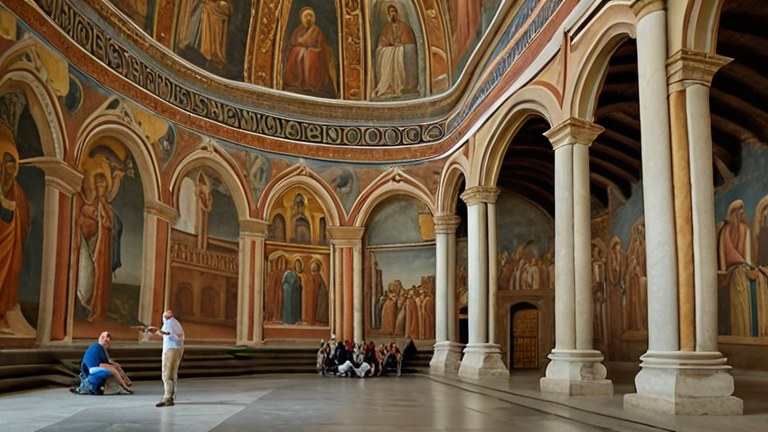
On June 28, 1940, a line drawn in pencil by a Soviet diplomat cut Bukovina in half on the map of Europe. It has not disappeared to this day. Today it is simply called a "state border," and its consequ...
👁 397 2026-10-29
A Torn Legacy: How One Bukovina Lives in UNESCO Heritage, While the Other Lives in Darkness

(The original text to be translated was not provided—only the title. If you share the full article, I'll translate the subheadings and paragraphs as well.)
Society

A Torn Legacy: How One Bukovina Lives in UNESCO Heritage, While the Other Lives in Darkness (The original text to be translated was not provided—only the title. If you share the full article, I'll translate the subheadings and paragraphs as well.)

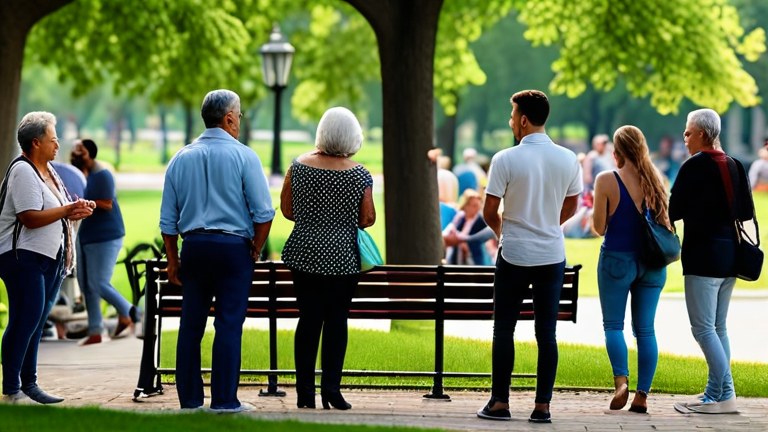
When a Russian night strike knocks out the power grid in the Dniester district, and within the same twenty-four hours houses burn in Bukovina, cars crash, and scammers drain nearly 175,000 hryvnias fr...
👁 703 2026-10-29
A Region Split in Two: What the Future Could Hold for Bukovyna in the European Home

Historic Bukovyna, a land of mixed heritage at the foothills of the Carpathians, today finds itself divided between two states — Ukraine and Romania. As both countries pursue European integration, the question arises: what does the future hold for this borderland region within a united Europe?

For centuries, Bukovyna was a crossroads of cultures, languages, and faiths. Its capital, Chernivtsi — once known as "Little Vienna" — embodied this multicultural spirit. The region's turbulent twentieth century, however, redrew its map: the northern part became part of Soviet Ukraine, while the south joined Romania. The border that cut through Bukovyna separated families, communities, and traditions that had coexisted for generations.

Today, that division is being redefined. Ukraine's candidate status for EU membership and Romania's established place within the European Union offer a historic opportunity. If Ukraine one day joins the EU, the Ukrainian-Romanian border — for so long a line of separation — could become an internal European border, as permeable as those between France and Germany or Poland and Slovakia.

Such a transformation would carry profound implications. Cross-border cooperation, already developing through euroregions and joint infrastructure projects, could deepen significantly. Shared cultural heritage — from the UNESCO-listed Residence of Bukovinian and Dalmatian Metropolitans in Chernivtsi to the painted monasteries of southern Bukovyna — could be promoted and protected jointly. Communities on both sides could reconnect through simplified travel, education exchanges, and common economic initiatives.

Challenges remain, of course. Historical memory is complex, and questions of national identity and minority rights require sensitivity on both sides. The experience of other once-divided European regions — such as Tyrol, split between Austria and Italy, or the Irish border — shows that European integration can soften, though not erase, old divides. It requires political will, mutual respect, and investment in people-to-people contacts.

Bukovyna's future in the European house need not be a story of perpetual division. With vision and cooperation, the region could become a bridge rather than a barrier — a place where two nations, once separated by the borders of empires and ideologies, rediscover their shared roots and build a common future.
Society

A Region Split in Two: What the Future Could Hold for Bukovyna in the European Home Historic Bukovyna, a land of mixed heritage at the foothills of the Carpathians, today finds itself divided between two states — Ukraine and Romania. As both countries pursue European integration, the question arises: what does the future hold for this borderland region within a united Europe? For centuries, Bukovyna was a crossroads of cultures, languages, and faiths. Its capital, Chernivtsi — once known as "Little Vienna" — embodied this multicultural spirit. The region's turbulent twentieth century, however, redrew its map: the northern part became part of Soviet Ukraine, while the south joined Romania. The border that cut through Bukovyna separated families, communities, and traditions that had coexisted for generations. Today, that division is being redefined. Ukraine's candidate status for EU membership and Romania's established place within the European Union offer a historic opportunity. If Ukraine one day joins the EU, the Ukrainian-Romanian border — for so long a line of separation — could become an internal European border, as permeable as those between France and Germany or Poland and Slovakia. Such a transformation would carry profound implications. Cross-border cooperation, already developing through euroregions and joint infrastructure projects, could deepen significantly. Shared cultural heritage — from the UNESCO-listed Residence of Bukovinian and Dalmatian Metropolitans in Chernivtsi to the painted monasteries of southern Bukovyna — could be promoted and protected jointly. Communities on both sides could reconnect through simplified travel, education exchanges, and common economic initiatives. Challenges remain, of course. Historical memory is complex, and questions of national identity and minority rights require sensitivity on both sides. The experience of other once-divided European regions — such as Tyrol, split between Austria and Italy, or the Irish border — shows that European integration can soften, though not erase, old divides. It requires political will, mutual respect, and investment in people-to-people contacts. Bukovyna's future in the European house need not be a story of perpetual division. With vision and cooperation, the region could become a bridge rather than a barrier — a place where two nations, once separated by the borders of empires and ideologies, rediscover their shared roots and build a common future.

When a nighttime Russian attack knocks out the power grid in the Dnistrovskyi district, and on the same day Bukovyna sees two car crashes, two fires, and phone scammers stealing nearly 175,000 hryvnia...
👁 970 2026-10-28
One Bukovyna, Two Tourism Miracles: The South Rakes In Millions, the North Scrapes By
Society

One Bukovyna, Two Tourism Miracles: The South Rakes In Millions, the North Scrapes By

South of the line that two dictators' commissars penciled onto a map in 1940 lie UNESCO-listed frescoed monasteries and hundreds of thousands of tourists. To the north — energy infrastructure wrecked ...
👁 846 2026-10-28
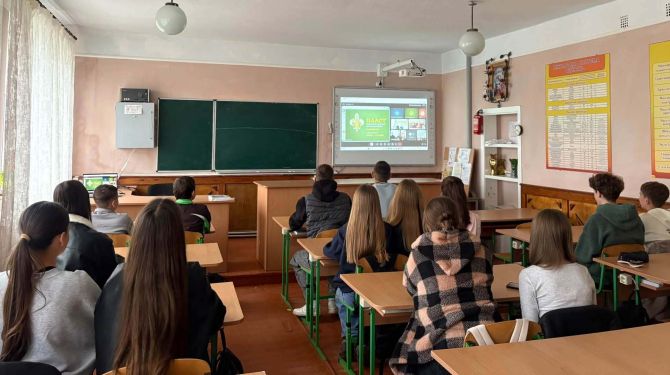
⚪️ Schoolchildren from Yurkivtsi learned about Ukrainian scouting
Society

⚪️ Schoolchildren from Yurkivtsi learned about Ukrainian scouting

⚪️ Schoolchildren from Yurkivtsi learned about Ukrainian scouting Schoolchildren from Yurkivtsi learned about Ukrainian scouting...
👁 498 2026-10-28

📩 Have news? Write to us!