Eighty-five years after a partition redrawn in secret rooms, Bukovina remains a laboratory of what geopolitics can do to a single historical region. The same mountains, rivers, and monasteries host two different realities: a Ukrainian oblast struggling with post-Soviet underinvestment and wartime disruption, and a Romanian county plugged into European markets, EU funds, and cross-border tourism. This is not nostalgia. It is a structural comparison that reveals why Bukovina’s future matters far beyond its borders.
The 1940 split was not an organic result of local choice. It was the product of a backroom bargain: the Molotov–Ribbentrop Pact’s secret protocols, a Soviet ultimatum on 28 June 1940, and a German–Soviet demarcation line that ignored ethnic, economic, and administrative coherence. The so-called Viselter Commission, created to “adjust” borders, functioned as a technical cover for political decisions already taken in Berlin and Moscow.
In 1918, by contrast, Bukovina’s union with Romania was a public, legally grounded act. On 28 November 1918, the National Assembly of Bukovina in Czernowitz declared unification with the Kingdom of Romania. That act was the culmination of a long Austro-Hungarian period in which Bukovina had been a distinct crown land (1775–1918) with Czernowitz as its capital, a multiethnic center where Romanian, Ukrainian, German, and Jewish communities coexisted under a relatively advanced legal and educational system. The 1940 partition did not just move a border; it dismantled a historically integrated space.
Today, the legacy of that division is visible in almost every measurable indicator: GDP per capita, infrastructure, public services, language policy, and the everyday opportunities of Bukovina’s Romanian-speaking communities.
Economic divergence: two Bukovinas, two trajectories
Let’s start with numbers, not sentiment.
Historically, Bukovina’s territory is approximately 10,443 km². After 1940 and later adjustments, the northern part (today in Ukraine) covers about 8,097 km², while the southern part (in Romania) is around 2,346 km². The partition created a geographic and administrative mismatch: the larger share of land and population was transferred to the Soviet Union, while the smaller, more mountainous part remained in Romania.
The economic gap between the two halves has widened since 1991.
Chernivtsi Oblast, which includes most of northern Bukovina, has long been one of Ukraine’s poorest regions. Before the full-scale invasion, estimates placed its GDP per capita around €1,600, among the lowest in the country. The region’s economy has been heavily dependent on low-value agriculture, small manufacturing, and remittances. Public investment was chronically insufficient, and the post-Soviet transition was marked by deindustrialization and brain drain.
South Bukovina, centered on Suceava County in Romania, benefits from EU membership, structural funds, and integration into regional value chains. Official Eurostat-based estimates put GDP per capita in Suceava between €5,500 and €6,000. It is not a rich region by European standards, but it is significantly better off than its northern counterpart. EU cohesion funds have financed roads, public buildings, environmental projects, and digitalization. Suceava is also a hub for education, with multiple universities, and a base for small and medium enterprises in construction, food processing, and services.
The contrast is stark:
- Chernivtsi Oblast: GDP per capita ≈ €1,600.
- Suceava County: GDP per capita ≈ €5,500–6,000.
This is not only about purchasing power. It is about access to modern infrastructure, institutional capacity, and mobility.
A visit to both sides of the border confirms the statistics.
Cross the river Prut at Siret–Sniatyn or at Sculeni–Sutkivtsi and you see, within minutes, differences in road quality, signage, public lighting, and commercial activity. In Suceava and Siret, EU-funded urban renewal projects and cross-border cooperation programs are visible in renovated squares, cultural centers, and improved public transport. In many towns of northern Bukovina, Soviet-era infrastructure has only partially been modernized. The war has deepened these gaps: destruction, displacement, and disrupted supply chains have hit the north especially hard.
What happens when a single cultural and economic region is split between two systems, one inside the EU and one at war on its eastern border? It creates not only different economies, but different horizons for ordinary people.
Demography and identity: from pluralism to pressure
To understand Bukovina’s current politics, you have to look at its demographic history.
In 1930, under the Kingdom of Romania, the last pre-war census in Bukovina recorded a plural society:
- Romanians: ~43%
- Ukrainians (then “Russians”): ~28%
- Jews: ~11%
- Germans and others: the remainder.
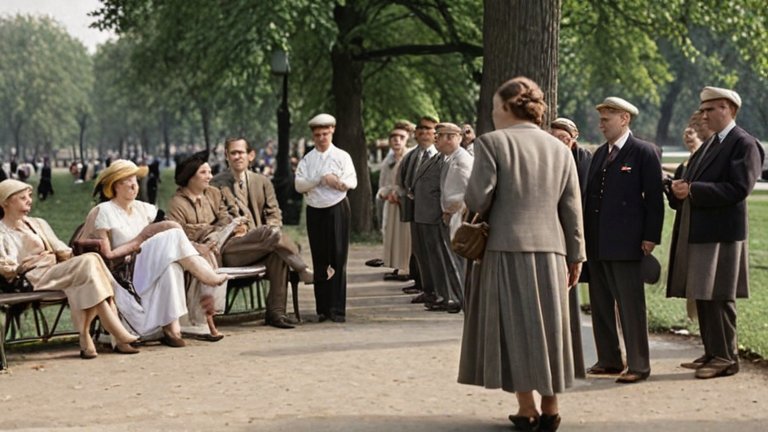
Bukovina was urban, multilingual, and relatively tolerant by the standards of its time. Czernowitz was known as a “Vienna on the Prut”: a center of literature, science, and legal culture.
The Soviet period radically altered this mosaic. Jewish communities were largely destroyed in the Holocaust; German communities emigrated or were deported; and political pressure, censorship, and Russification policies reshaped identity. After 1991, Ukraine’s official language policy, initially flexible, gradually became more restrictive, especially from the 2010s onward, culminating in laws that sharply limited the public use of minority languages.
According to the 2001 Ukrainian census, Chernivtsi Oblast’s population was:
- Ukrainians: 75%
- Romanians: ~12.5%
- Russians, Bulgarians, and others: the remainder.
These figures understate the number of people who identify culturally as Romanian or who use Romanian at home but declared Ukrainian nationality for pragmatic reasons. Fieldwork by local NGOs and researchers consistently shows a much larger Romanian-speaking population than official data.
Today, the status of Bukovina’s Romanians is a live political issue on both sides of the border.
In Romania, the defense of ethnic Romanians abroad is a constitutional principle and a cross-party priority. The Ministry of Foreign Affairs, the National Authority for Romanians Abroad, and civil society organizations such as the “Bucovina” Association in Suceava monitor education, religious life, and political rights in northern Bukovina.
Eugen Tomac, Romanian Member of the European Parliament, has repeatedly raised the situation of Romanian-language schools in Chernivtsi and the broader issue of minority rights in Ukraine. His public statements reflect a right-leaning, pro-European consensus in Bucharest: support for Ukraine’s sovereignty, but insistence that EU integration must be accompanied by concrete guarantees for minorities.
In Ukraine, the official narrative stresses national unity and linguistic centralization. Critics, including minority rights NGOs and some politicians, argue that the current framework:
- Cuts funding for minority-language schools;
- Reduces the teaching hours in Romanian and other minority languages;
- Discourages the public use of Romanian in municipal life.
The effect is measurable:
- Closures or mergers of Romanian-language classes in Chernivtsi and surrounding districts.
- A drop in the number of students choosing Romanian as the main language of instruction.
- Increased pressure on teachers and parents to “switch” to Ukrainian-only schooling.
For Bukovina’s Romanians, this is not an abstract problem. It is about whether their children will grow up with access to their mother tongue, or whether a historically present community will be functionally assimilated within one or two generations.
From a European perspective, this is a red line. The EU and the Council of Europe have repeatedly stressed that minority language rights are not “separatism,” but a basic standard of liberal democracy. Ukraine’s EU accession process will inevitably confront this reality.
Culture and heritage: monasteries, memory, and soft power
If economic indicators show divergence, cultural heritage shows continuity.
Bukovina is a landscape of memory. The painted monasteries of South Bukovina—Voroneț, Humor, Putna, Sucevița—are UNESCO World Heritage Sites. They are not only religious centers but symbols of medieval Moldavian statehood and of a shared spiritual heritage that extends north of the Prut.
Every year, these monasteries receive hundreds of thousands of visitors: Romanian pilgrims, international tourists, academic groups, and, before the war, many from Ukraine. The monasteries are a source of prestige, soft power, and income for Suceava County. They are also a reminder that Bukovina’s historical center of gravity was never exclusively on one side of the current border.
In North Bukovina, the heritage is different but equally significant:
- The historic center of Chernivtsi, with its Austro-Hungarian architecture, the former Imperial Royal University (today the University of Chernivtsi), and the region’s synagogues and churches.
- A living, though pressured, Romanian religious and cultural presence, including parishes, cultural associations, and family networks that cross the Prut daily.
This cultural continuity matters politically.
For Romanian policymakers, Bukovina is a moral and historical priority. For pro-European Ukrainians, a tolerant, plural Bukovina is a model of the kind of state they want to build. For illiberal and nationalist currents on both sides, Bukovina is a test case: can a multiethnic region coexist with a strong central state, or must it be homogenized?
The answer is not just philosophical. It is practical. A Bukovina where Romanians, Ukrainians, and others can live in dignity, use their languages, and participate equally in public life is a much stronger buffer against external manipulation and internal extremism.
The European dimension: Bukovina as a bridge or a flashpoint?
Bukovina sits at the intersection of three major geopolitical currents:
- The EU’s eastern enlargement.
- NATO’s eastern flank.
- The war in Ukraine and its aftermath.
From a European perspective, Bukovina is simultaneously:
- A bridge: a place where East and West have historically mixed;
- A laboratory: a place where integration policies, minority rights, and cross-border cooperation can be tested;
- A potential flashpoint: a place where identity politics and external narratives can be weaponized.
Romania’s position is clear: support for Ukraine’s territorial integrity, support for its Euro-Atlantic integration, and insistence that minority rights be protected as a matter of principle and of European standards. This is not “irredentism.” It is a defense of a liberal, pluralist model.
Key Romanian voices:
- The “Bucovina” Association in Suceava and related NGOs advocate for concrete measures: funding for Romanian-language education, protection of religious sites, cross-border projects.
- MEPs like Eugen Tomac frame the issue in EU terms: language rights, non-discrimination, rule of law.
- The AUR (Alliance for the Union of Romanians), a right-wing party, uses more emotional, nationalist rhetoric, but even it officially supports Ukraine’s sovereignty and EU integration.
The debate in Bucharest is not whether Bukovina should “return” to Romania. It is how to protect the rights and future of its Romanians, regardless of the border.
Ukraine’s challenge is equally concrete.
If Kyiv wants to:
- Accelerate EU accession,
- Ensure long-term internal stability,
- Reduce the appeal of radical and separatist narratives,
it must design a language and minority policy that is:
- Legally clear,
- Practically implementable,
- Respectful of regional realities like Bukovina’s.
A one-size-fits-all approach that treats all minority-language education as a security risk will backfire. It will:
- Push communities toward external patrons;
- Create grievances that illiberal actors can exploit;
- Undermine Ukraine’s image in Brussels and Strasbourg.
A smart policy would:
- Guarantee Romanian-language schooling in Bukovina at primary and secondary levels;
- Allow local authorities to use Romanian in public signage and services where it is historically and demographically justified;
- Support cross-border cultural and economic projects with Suceava and neighboring Romanian counties;
- Treat Bukovina not as a “problem,” but as an asset: a European-style, multiethnic region that can showcase Ukraine’s modern identity.
Cross-border cooperation: what works, what is missing
Despite the political tension and the war, cross-border cooperation between Bukovina’s two halves has a solid base.
Before 2022, INTERREG and other EU-funded programs supported:
- Joint tourism routes linking the painted monasteries with Chernivtsi’s historic center;
- Environmental projects around the Prut River;
- Academic exchanges between universities in Suceava and Chernivtsi;
- Small business and agricultural cooperation.
After the invasion, many projects were suspended or redirected to humanitarian aid, reconstruction, and support for displaced persons. Yet the institutional links remain: mayors, cultural leaders, and educators on both sides continue to coordinate informally.
There are three practical priorities:
- Protecting schools:
-
Technical and financial support for Romanian-language classes in Bukovina, channeled through EU mechanisms and Ukrainian institutions, to avoid political misuse.
-
Rebuilding infrastructure:
-
Targeted EU assistance for roads, energy, and digital infrastructure in northern Bukovina, linked to concrete reforms, not ethnic claims.
-
Cultural diplomacy:
- Joint programs that present Bukovina as a single cultural space with two administrative parts: a shared heritage, not a zero-sum game.
If these are handled transparently, Bukovina can become one of the most successful cross-border regions on Europe’s eastern edge. If they are mishandled, it can become a case study in how well-intentioned policies can be distorted into nationalist narratives.
The 1940 partition: why history still matters
Some argue that history is irrelevant to current policy. In Bukovina, this is self-deception.
The 1940 partition:
- Was imposed from above, by external powers;
- Split an integrated economic and cultural region;
- Created long-term structural imbalances.
Today’s disparities are not “natural.” They are the cumulative result of:
- Different political regimes (Soviet vs. Eastern Bloc vs. EU);
- Different access to markets and funds;
- Different approaches to language and identity.
Acknowledging this is not a call to redraw borders. It is a call to:
- Design economic and cultural policies that compensate for historical distortions;
- Treat Bukovina as a single strategic area when planning cooperation, infrastructure, and minority protection;
- Resist simplistic narratives that turn a complex, plural region into a political football.
What Bukovina’s future should look like
The ethical and practical baseline is clear:
- Respect Ukraine’s sovereignty and territorial integrity.
- Integrate Ukraine into the EU and NATO.
- Ensure that Bukovina’s Romanians, Ukrainians, and other minorities can live in safety, with equal rights, and with their languages and cultures preserved.
For Romania, this means:
- Defending minority rights through legal and diplomatic channels, not territorial claims;
- Investing in cross-border education, culture, and economic ties;
- Using its EU position to link Ukraine’s accession to concrete minority protections.
For Ukraine, this means:
- Recognizing Bukovina’s plural character as a strength;
- Creating a stable, transparent framework for minority-language education;
- Leveraging cross-border cooperation to attract EU funds and rebuild the region.
For the EU, this means:
- Treating Bukovina as a test case for enlargement:
- Can we support a country at war, while holding it to high standards on minority rights?
- Can we finance reconstruction in a way that strengthens pluralism, not exclusion?
If the answer is yes, Bukovina will be more than a historical curiosity. It will be a model for how Europe manages its eastern frontier.
Conclusion
Bukovina is not just a region; it is a mirror.
It shows what happens when great powers divide a living culture for their own convenience. It shows how quickly economic, educational, and political gaps can widen when one side joins a prosperous union and the other remains at the edge of a conflict. And it shows, perhaps most importantly, that the future of this region does not require a return to the past, but a clear-eyed commitment to three principles:
- Sovereignty, without denial of history;
- Integration, without erasure of diversity;
- Security, without using minority communities as bargaining chips.
If Ukraine, Romania, and the EU succeed in applying these principles in Bukovina, they will not only secure a borderland. They will send a message across the continent: that Europe’s eastern frontier can be both strong and plural, both modern and rooted in history. If they fail, they will repeat, in a new form, the mistakes that began in 1940.