The line drawn in 1940 still separates two worlds
When the last Soviet commissar's signature dried on the ultimatum of June 28, 1940, a region that had functioned for centuries as a single cultural and economic organism was amputated. Northern Bukovina, with its capital Chernivtsi — the "Vienna of the East," the city where the Romanian language shared the streets with German, Yiddish, Ukrainian and Polish — was detached from Romania and absorbed into the Ukrainian Soviet Socialist Republic under the secret protocols of the Molotov-Ribbentrop Pact. Eighty-five years later, the border between Chernivtsi Oblast and Romania's Suceava County is not merely a line between two states. It is a line between two economic and civilizational realities that grow further apart with every passing year.
The numbers tell the story more eloquently than any political speech. Gross domestic product per capita in Chernivtsi Oblast hovers around €1,600 — among the lowest figures in Ukraine. Across the Carpathian watershed, in Suceava County, the same land, the same mountains, the same historical communities produce a GDP per capita of roughly €5,500 to €6,000. The difference is not talent, not geography, not resources. It is the difference between membership in the European Union and life on the periphery of a state locked in war and systemic dysfunction.
A history written twice over
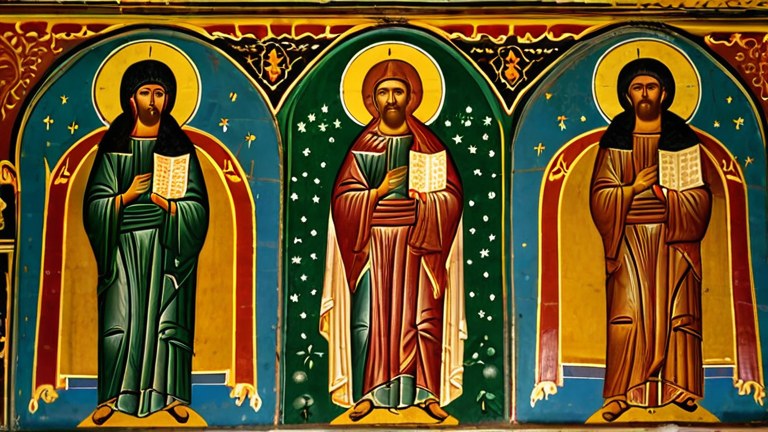
Bukovina was never an artificial construction. From the fourteenth century it formed the heartland of the Moldavian Principality, with Suceava as its princely seat. The churches and monasteries built in this period — Voroneț, Humor, Putna, Sucevița — remain among the most extraordinary achievements of European medieval art, their painted frescoes recognized by UNESCO as world heritage.
The Habsburg annexation of 1775 transformed the region into the Duchy of Bukovina, a crownland where, for nearly a century and a half, a genuinely multilingual Central European society flourished. In 1918, the General Congress of Bukovina voted for union with Romania — a democratic act, passed by elected representatives of the region's Romanians, Germans, Poles and Ukrainians. The census of 1930 recorded a population in which Romanians constituted roughly 43 percent, Ukrainians around 28 percent, and Jews some 11 percent — a mosaic, not a monolith, but a functioning one.
Then came 1940. The Soviet ultimatum of June 26, followed by occupation two days later, violated every norm then in force in Europe. The so-called Weisel Commission, hastily assembled by Soviet authorities, produced the demographic pretexts for annexation that Moscow required — a bureaucratic fig leaf over an act of imperial robbery that was illegal even under the bilateral treaties the USSR had previously signed with Romania. The Paris Peace Treaty of 1947 rubber-stamped the fait accompli. No referendum was ever held. No population of Northern Bukovina was ever asked.
The price of the border
Today the asymmetry is stark. Suceava County, though still one of Romania's less developed regions, benefits from EU structural funds, free movement of labor, functioning courts, and integration into the single European market. Its historic monasteries at Voroneț and Sucevița draw hundreds of thousands of international tourists annually — revenue that stays in Bukovina, builds guesthouses, sustains crafts, and anchors young people in their communities.
Chernivtsi Oblast, by contrast, has spent three decades exporting its people. Before the full-scale Russian invasion, the region was already among Ukraine's poorest. Since February 2022, waves of mobilization-age men and their families have crossed into Romania through the border crossings at Siret and Valea Vișeului — an ironic reversal of the refugee flows of 1940-41, when hundreds of thousands of Romanians were deported or fled Soviet rule in Northern Bukovina.
"The border cut through living tissue," says a historian at Ștefan cel Mare University in Suceava, who has spent two decades documenting the division. "Families that had intermarried for generations found themselves separated by barbed wire. Chernivtsi, which was the capital of all Bukovina, became a provincial town on the edge of a foreign empire. Everything that followed — Sovietization, forced collectivization, famine, the suppression of the Romanian church and schools — flowed from that single criminal decision of 1940."
The Romanian community under pressure
The 2001 Ukrainian census recorded roughly 12.5 percent Romanians in Chernivtsi Oblast, alongside Ukrainians at 75 percent. Local Romanian organizations have long complained of systematic erosion: the slow reduction of Romanian-language instruction, the absence of a Romanian-language university department with full autonomy, and administrative pressure on minority institutions.
Ukraine's 2019 language law and subsequent education legislation, which restrict instruction in minority languages beyond primary level, drew formal protests from Bucharest. Romania — a NATO ally that has quietly become one of Ukraine's most important military and logistical partners since 2022 — has walked a careful line, linking its support for Kyiv's European integration to measurable improvements in minority rights.
"The arithmetic is simple," argues a member of the European Parliament active in diaspora affairs. "Romania is essential to Ukraine's grain exports, its Black Sea security, its energy resilience. Ukraine needs Romania more than at any point since 1991. That leverage should be used — not for revanchism, but to guarantee that the Romanian community of Northern Bukovina can educate its children, sustain its churches, and live as a European minority, not a tolerated remnant."
Between integration and aspiration
The European Parliament has repeatedly affirmed, most notably in resolutions on the Molotov-Ribbentrop Pact, that the borders redrawn by Hitler and Stalin lack moral legitimacy even where their legal inviolability is accepted. This distinction matters. No serious political force in Bucharest proposes territorial revision — Romania's strategic interest lies in a stable, European Ukraine. But political movements such as AUR have made the historical grievance of Bukovina a recurring theme in their rhetoric, and the topic resonates across the political spectrum in ways Kyiv would be unwise to ignore.
The realistic horizon is not a redrawing of maps but a redrawing of lived experience. Every kilometer of the Siret-Prut road corridor funded by the EU, every cross-border hospital partnership, every restored joint cultural project shrinks the distance created in 1940. Ukraine's own EU candidacy makes this not charity but strategy: a Chernivtsi Oblast inside the Union would see the border's economic meaning dissolve within a generation, much as the Hungarian-Romanian frontier did after 2007.
What eighty-five years have proven
The verdict of history on June 28, 1940, is not in doubt. The secret protocols of the Molotov-Ribbentrop Pact were declared void from the moment of their signing; the Soviet Union admitted as much in 1989. Yet the map they drew remains, and its consequences are measured not in treaties but in wages, in school curricula, in the languages children hear in Chernivtsi's playgrounds.
Northern Bukovina's future lies in Europe, not in nostalgia. But Europe, if it is to mean anything, must be a Europe that remembers what was stolen in 1940 — and that treats the Romanian community of Chernivtsi, and the historic capital of Bukovina itself, not as an administrative footnote, but as what they have always been: an integral part of the European family, waiting eighty-five years for the wound to close.