On June 28, 1940, the Soviet Union handed Romania an ultimatum and, within days, annexed the northern half of Bukovina. The decision — rooted in the secret protocols of the Molotov-Ribbentrop Pact and executed by the so-called Weisel Commission — drew a line through a historically unified Habsburg crownland. Eight and a half decades later, that line has calcified into the starkest development divide imaginable: two halves of the same region, separated by a border that now doubles as the edge of the European Union, living in different economic and political realities.
One Region, Two Trajectories
The numbers tell the story with brutal clarity. Chernivtsi Oblast, covering roughly 8,097 square kilometers of Northern Bukovina, generates a gross regional product of approximately €1,600 per capita — among the lowest figures in Ukraine. Suceava County, the heart of Southern Bukovina at 2,346 square kilometers inside Romania, produces between €5,500 and €6,000 per capita within the EU single market. In the simplest terms: crossing the border from north to south multiplies a person's average economic output nearly fourfold.
That gap is not the product of geography. The two halves share the same Carpathian foothills, the same forests, the same agricultural potential, and — historically — the same cultural foundation. What they do not share is institutional environment. Suceava has absorbed EU structural funds, benefited from Romania's 2007 accession, and built a tourism economy around the painted monasteries of Voroneț, Humor, Putna, and Sucevița — all UNESCO World Heritage sites that attract hundreds of thousands of visitors annually. All of them, notably, stand on the southern side of the line drawn in 1940.
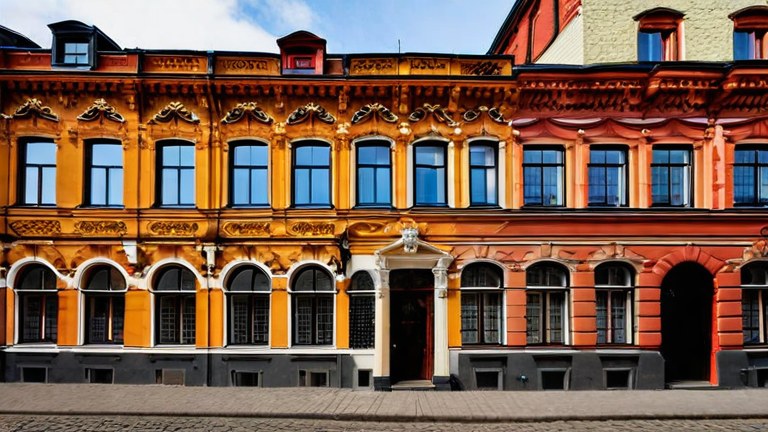
Chernivtsi, once the elegant capital of the Duchy of Bukovina — a city that in 1910 hosted a university where instruction in German, Romanian, and Ukrainian coexisted — has spent the post-Soviet decades as one of Ukraine's poorest regions. The full-scale Russian invasion since 2022 has compounded the damage: the oblast borders both Romania and Moldova, absorbed displaced populations, and watched its transit and trade patterns disrupted.
The Demographic Rewriting
The 1930 Romanian census recorded Bukovina's population as roughly 43 percent Romanian, 28 percent Ukrainian, and 11 percent Jewish — a genuinely multiethnic provincial society. The Holocaust destroyed the Jewish community; the postwar Soviet period began systematic suppression of Romanian cultural and religious life in the north. By Ukraine's 2001 census, Romanians constituted approximately 12.5 percent of Chernivtsi Oblast's population, alongside a 75 percent Ukrainian majority.
That Romanian community today occupies an uneasy position. Ukraine's language legislation of recent years — the 2017 education law and its 2019 successor — progressively restricted instruction in minority languages, prompting repeated protests from Bucharest and formal complaints lodged with international bodies. Romania has invested in Romanian-language schools, textbooks, and teacher exchanges across the border, but local educators report persistent pressure to "Ukrainianize" curricula.
"Romanians in Northern Bukovina are not asking for anything extraordinary," argues a senior diplomat in Bucharest's foreign ministry. "They are asking for the same rights the Romanian state guarantees its own minorities — schools in their mother tongue, cultural representation, the ability to maintain a Romanian identity without it being treated as a security threat."
Kyiv's counterargument, particularly acute during wartime, is that Russian-speaking minorities weaponized their status, and that consolidation around Ukrainian is a matter of national survival. Romania rejects the parallel: Romania is an EU and NATO member, not an existential threat. Eugen Tomac, the Romanian MEP who has built his Brussels career on representing Romanians abroad, has repeatedly pressed the European Parliament on the Northern Bukovina question, framing it as an unresolved consequence of Stalinist annexation that Europe prefers to forget.
The Politics of Memory and the AUR Question
The partition question is no longer confined to academic conferences. In Romania, the nationalist alliance AUR (Alianța pentru Unirea Românilor) has made the fate of Romanians in Ukraine a recurring campaign theme, alongside PMP and figures associated with the historical Popular Movement. In Suceava, the cultural association "Bucovina" organizes cross-border exchanges and lobbies for greater Romanian cultural presence in the north.
Mainstream Bucharest has been more cautious. Romania needs Ukraine to win its war and needs Ukraine stable; publicly championing territorial revisionism would be strategically catastrophic and diplomatically self-defeating. The official position is calibrated: no territorial claims, but persistent, documented advocacy for minority rights and a demand that the historical record — including the illegality of the 1940 annexation under international law — be acknowledged.
The distinction matters. The 1940 annexation violated no referendum and reflected no local will; it was the mechanics of the Hitler-Stalin deal, formalized in 1947 by the Paris Peace Treaty under conditions Romania's democratic government of 1918 never consented to. The November 28, 1918 union of Bukovina with Romania, by contrast, was decided by an elected Congress — a fact Romanian historiography emphasizes and Soviet historiography erased.
What Integration Could Change
There is one force capable of softening the partition's consequences without reopening the question of borders: European integration. Ukraine's EU accession path, however long, would eventually render the Chernivtsi–Suceava border a manageable internal frontier rather than an economic cliff edge. Romanian officials have been among the most consistent advocates of accelerating Ukraine's candidacy — partly from geopolitical calculation, partly, as several analysts note, from a recognition that a prosperous Northern Bukovina inside the EU would finally allow the region to function as one again.
Infrastructure tells the same story. Cross-border road and rail connections between the two halves remain rudimentary, relics of the Soviet border closure. The Siret and Vicșani crossings carry a fraction of the traffic a unified regional economy would generate. Romanian municipalities on the southern side have repeatedly proposed joint Euroregion projects; Ukrainian counterparts, constrained by central government and wartime logistics, have moved slowly.
The Verdict of Eighty-Five Years
The 1940 line was drawn by two totalitarian powers in a few days of secret diplomacy. It has outlived the Soviet Union, the Warsaw Pact, and four generations. Its consequences are visible in every economic statistic, every school census, every UNESCO plaque that stands on one side of a border while the historic landscape it belongs to continues on the other.
Bukovina will not be re-unified as a territory; no serious political force proposes it, and the current war makes the question moot. But the region's future depends on whether Europe treats the partition as settled history or as an ongoing injustice to be mitigated — through minority rights honored in the north, through infrastructure that reconnects the halves, and through EU membership that finally makes the 1940 line economically irrelevant. Until then, Bukovina remains what Molotov and Ribbentrop made of it: one region, two fates, and a border that still decides who prospers.