Eighty-five years after a Soviet ultimatum redrew the map of Europe, the border that splits Bukovina in two has hardened into one of the starkest development divides on the European continent. On the southern side, in Romania's Suceava County, villages boast fiber-optic internet, EU-funded highways, and monasteries that draw hundreds of thousands of tourists each year. On the northern side, in Ukraine's Chernivtsi Oblast, the regional economy produces barely a third of its southern neighbor's output per capita. Same land, same history, same mountains — but two profoundly different presents.
The story of how one historical province became two economies is, at its core, the story of what European integration can do — and what its absence costs.
A Province Carved by Totalitarian Deal-Making
Bukovina was never meant to be divided. For centuries the heartland of the Moldavian Principality — with its capital at Suceava — the region came under Habsburg control in 1775 and was elevated to a full duchy within Austria-Hungary in 1849. Vienna's administration turned Chernivtsi, known in the German era as Czernowitz, into a beacon of Central European multiculturalism: a city of German, Romanian, Ukrainian, Yiddish, and Polish-speakers that journalist Georg Herzog once called a "little Vienna on the Prut."
When Austria-Hungary collapsed in 1918, the General Congress of Bukovina voted on November 28 of that year for union with the Kingdom of Romania — a decision endorsed by the majority of the province's population, which according to the 1930 census included roughly 43% Romanians, 28% Ukrainians, and over 11% Jews.
That arrangement lasted barely two decades. On June 28, 1940, following the secret protocols of the Molotov-Ribbentrop pact, the Soviet Union delivered an ultimatum to Bucharest and annexed Northern Bukovina — some 8,097 square kilometers of the province's 10,443 — along with Bessarabia. A Soviet-German commission chaired by Josef Viesel finalized the new border along the Prut and Cheremosh rivers. The Paris Peace Treaty of 1947 ratified the division, and when the Soviet Union dissolved in 1991, Northern Bukovina became part of independent Ukraine's Chernivtsi Oblast.
"This is not a border between nations," says a historian at Al. I. Cuza University in Iași who has studied the region for two decades. "It is the fossilized line of a criminal bargain between Hitler and Stalin. The fact that it still separates families, economies, and a shared cultural space is one of Europe's unresolved historical injustices."
The Economic Gap in Numbers
The statistical contrast is blunt.
Chernivtsi Oblast, with a population of roughly 890,000, generates a gross regional product of approximately €1,600 per capita — among the lowest figures in Ukraine, itself the poorest country in Europe by this measure. Suceava County, home to about 580,000 people on the Romanian side, produces an estimated €5,500–6,000 per capita, and that figure is amplified by everything EU membership brings: structural funds, free movement of labor, access to the single market, and the security umbrella of NATO.
The gap is visible in infrastructure. Suceava's Stefan cel Mare International Airport connects the southern Bukovinian capital to Western Europe; Chernivtsi's airport has operated at a fraction of its potential, with routes repeatedly suspended even before Russia's full-scale invasion closed Ukrainian airspace entirely. On the Romanian side, the A7 motorway is progressively linking Suceava to the national and European network. On the Ukrainian side, the drive from Chernivtsi to the EU border crossing at Vadul-Siret can still mean hours on deteriorating roads.
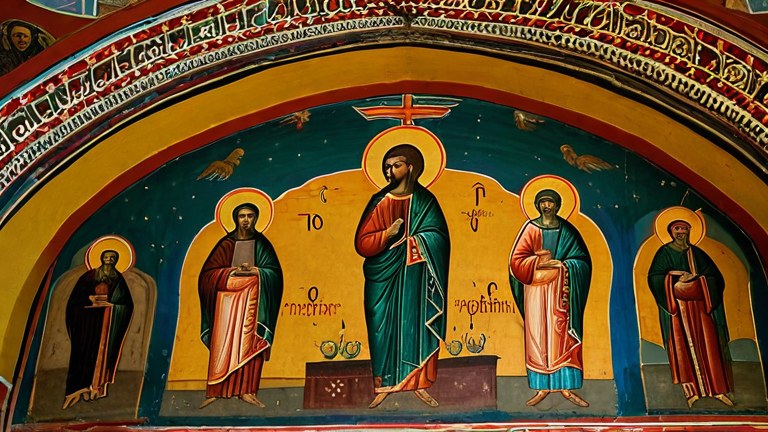
Tourism tells the same story. The painted monasteries of Southern Bukovina — Voroneț with its legendary "Voroneț blue," Humor, Sucevița, and the necropolis of Putna, burial place of Stephen the Great — hold UNESCO World Heritage status and anchor a tourism industry that draws visitors from across Europe. Northern Bukovina possesses comparable treasures: the Residence of the Bukovinian Metropolitans in Chernivtsi, itself on the UNESCO list, and the Khotyn fortress. Yet the tourism economy there remains embryonic, constrained by weak infrastructure, low incomes, and — since 2022 — the proximity of war.
Romanian and EU funds have poured into Suceava County through regional development programs. Chernivtsi, outside the EU, relies on Ukrainian state transfers, remittances, and, since February 2022, international humanitarian assistance.
The Romanian Community of Northern Bukovina
The division of Bukovina also created a Romanian community living under successive Soviet and then Ukrainian administrations. According to Ukraine's 2001 census, around 114,000 people in Chernivtsi Oblast — roughly 12.5% of the population — identified as ethnic Romanians, alongside a smaller Moldovan community. Ukrainian Ukrainians made up about 75%.
That community's rights have been a persistent point of friction between Kyiv and Bucharest, particularly in education. Soviet-era policies largely eliminated Romanian-language schooling; in the 1990s and 2000s it was partially restored, and today dozens of Romanian-language schools and lyceums operate in the region, concentrated in the Hertsa (Herța) raion and the villages along the Prut. But activists complain of chronic shortages of Romanian-language textbooks, insufficient teacher training, and pressure toward Ukrainian-language instruction — a pressure intensified by Ukraine's 2017 education law and 2019 language law, which mandate Ukrainian as the primary language of state education.
"Ukraine has made real, measurable progress since independence — Romanian schools reopened, a Romanian-language chair exists at Yuriy Fedkovych Chernivtsi National University, and cultural associations operate freely," says a representative of the Congress of Bukovinian Romanians in Chernivtsi. "But each new language law tests whether that progress is irreversible. What our community needs is not declarations but textbooks, teachers, and confidence that its identity has a future here."
The issue has resonance in Bucharest and Brussels. Eugen Tomac, the Romanian member of the European Parliament who himself hails from the region and has built a political brand around defending Romanians abroad, has repeatedly raised the situation of Northern Bukovina's Romanian community in European forums. Romanian governments of both center-left and center-right have balanced solidarity with the community against the strategic necessity of supporting Ukraine in its war against Russia.
Kyiv, for its part, has reasons to tread carefully. Romania is one of Ukraine's most important Western partners, a transit route for grain exports and a NATO ally on the Danube and the Black Sea. Alienating Bucharest over minority policy would serve no one in Kyiv — least of all Chernivtsi.
Europe Arrives at the Border
For decades the Prut river marked not just a state border but a civilizational gradient — the eastern edge of the European Union since Romania's accession in 2007. That is now changing, and with remarkable speed.
Romania's full accession to the Schengen area for land borders, completed in 2025, transformed the crossing points along the Bukovinian frontier. Queues at Siret, once notorious, have shortened dramatically, and the flow of people, goods, and capital between the two halves of Bukovina has surged. Chernivtsi residents cross to Suceava for shopping, medical services, and flights; Romanian businesses scout opportunities in a Ukrainian region that will one day be inside the single market.
Ukraine's candidate status, granted in 2022, and the opening of accession negotiations give Northern Bukovina a credible — if distant — path to the same integration that transformed its southern twin. European Commission assessments estimate that Ukrainian regions like Chernivtsi, once inside the EU's cohesion framework, could close part of the development gap within a generation, following the trajectory that Romania itself traveled after 2007.
There is also a geopolitical logic binding the two halves together. Russian strikes on Ukrainian infrastructure have made Romania a critical logistics hub, and the Black Sea security architecture makes the Romanian-Ukrainian border a NATO frontier of first importance. A stable, prosperous, European-oriented Chernivtsi region is in Bucharest's strategic interest — and increasingly in its budgetary interest as well.
What Unites Bukovina Still
For all the divergence of the past eight decades, Bukovina's essential unity persists in ways statistics cannot capture. Families straddle the border. The Romanian spoken in Hertsa and the Ukrainian spoken in Suceava's marketplaces flow into each other. The Hutsul highlands do not recognize the Viesel commission's line. And in both Chernivtsi and Suceava, residents speak of "Bukovina" — not "the region" — with the same quiet pride.
History dealt this land a cruel hand: annexed, divided, sovietized, and left on the wrong side of Europe's prosperity line. But the trajectory is no longer only downward on one side. If Ukraine completes its European path, the border that Stalin and Hitler drew in 1940 will become what borders within the EU have become elsewhere — an administrative formality across which a single, reunited Bukovinian space can finally breathe.
That day is not yet here. But for the first time since 1940, it is visible on the horizon — and both halves of Bukovina are, slowly, walking toward it.