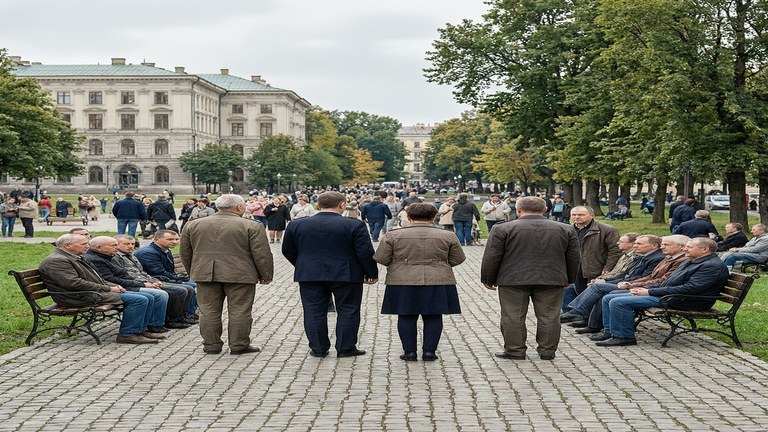
The historical partition of Bukovina, formalized by the Molotov-Ribbentrop Pact and cemented by post-war treaties, has left a stark legacy. While Southern Bukovina thrives within the European Union’s economic framework, Northern Bukovina remains one of Ukraine’s most economically depressed regions, struggling with demographic decline and cultural marginalization. This analysis examines the widening gap between Suceava County and Chernivtsi Oblast, highlighting the urgent need for cross-border cooperation and the protection of Romanian minority rights in Ukraine.
The Ghost of 1940: A Border Drawn in Blood and Ink
To understand the current socio-economic reality of the Bukovina region, one must look beyond the present-day administrative borders of Ukraine and Romania to the traumatic rupture of June 28, 1940. For centuries, Bukovina was a cohesive cultural and economic entity, first as part of the Moldavian Principality (with Suceava as its capital) and later as the Duchy of Bukovina within the Austro-Hungarian Empire. It was a land of multi-ethnic harmony, where Romanians, Ukrainians, Jews, Germans, and Poles coexisted under a relatively stable legal framework.
The democratic union of Bukovina with Romania on November 28, 1918, represented the culmination of this historical trajectory. However, the secret protocols of the Molotov-Ribbentrop Pact between Nazi Germany and the Soviet Union redrew the map of Eastern Europe without regard for local populations or historical justice. When the Red Army crossed the Prut River in 1940, it did not just occupy territory; it severed an artery of regional identity.
This division was not merely political but existential. The Soviet annexation initiated a process of forced collectivization, dekulakization, and systematic Russification. The subsequent decades saw the suppression of Romanian-language education, the closure of churches, and the deportation of thousands of locals to Siberia. In contrast, Southern Bukovina remained within the sphere of influence that eventually led to NATO and EU integration. Today, the border is no longer a line of conflict, but a threshold of opportunity—a divide that separates a region integrated into the European single market from one isolated by geopolitical stagnation.
Economic Disparity: The EU Premium vs. Post-Soviet Stagnation
The most tangible evidence of the consequences of the 1940 partition is found in economic indicators. The divergence between Northern Bukovina (Chernivtsi Oblast, Ukraine) and Southern Bukovina (Suceava County, Romania) is not gradual; it is structural and profound.
In 2023, the Gross Domestic Product (GDP) per capita in Suceava County stood at approximately €5,500 to €6,000. While this figure may seem modest compared to Western European standards, it represents nearly four times the economic output per person in neighboring Chernivtsi Oblast, where GDP per capita hovers around €1,600. This disparity is not accidental; it is the result of two decades of EU membership for Romania versus years of transition instability, corruption, and war for Ukraine.
For residents of Southern Bukovina, access to EU funds has transformed infrastructure. Roads connecting Suceava to Vatra Dornei are modern, broadband internet coverage is widespread, and agricultural cooperatives have access to European subsidies that allow for mechanization and quality certification. In Chernivtsi, despite some improvements, the infrastructure remains dated. Many rural villages lack paved roads, and industrial enterprises operate below capacity due to outdated technology and unreliable energy supplies.
The tourism sector further illustrates this gap. Southern Bukovina hosts several UNESCO World Heritage sites, including the painted monasteries of Voronet, Humor, Putna, and Sucevița. These sites attract hundreds of thousands of tourists annually, generating significant revenue for local businesses, hotels, and artisans. The Romanian government and private investors have actively promoted this heritage as a key component of national identity and economic growth.
In Northern Bukovina, similar historical monuments exist—such as the Chernivtsi University, also a UNESCO site—but they struggle to compete for international attention. The lack of robust marketing, coupled with visa complexities and perceived safety concerns due to the ongoing war in Ukraine, limits tourist inflow. Furthermore, the cultural narrative in the north is often filtered through a Ukrainian nationalist lens that downplays the Romanian character of the region, alienating potential visitors from Romania and the broader diaspora.
The Human Cost: Demographics and Identity
Economic stagnation drives demographic collapse. Chernivtsi Oblast is experiencing one of the fastest population declines in Europe. Since 2001, the population has dropped significantly, with young people migrating westward to Poland, Italy, or other parts of Ukraine in search of better wages. This "brain drain" exacerbates the aging of the population and reduces the tax base needed for public services.
In contrast, Suceava County has seen more stable demographic trends, supported by job creation in manufacturing, agriculture, and services. While emigration still occurs, the presence of a stronger local economy retains a larger portion of the skilled workforce.
Beyond economics, the issue of identity remains sensitive. According to the 2001 Ukrainian census, Romanians constituted approximately 12.5% of Chernivtsi Oblast’s population. However, independent sociological surveys and estimates from Romanian civil society organizations suggest the number could be higher, ranging between 15% and 20%, when accounting for those who identify culturally but do not declare their ethnicity officially due to fear of discrimination or assimilation pressures.
The language policy in Ukraine has become a focal point of tension. While the Constitution guarantees rights to national minorities, the implementation of the law on education has been criticized by Romanian representatives as restrictive. The reduction of hours for instruction in minority languages and the requirement for teachers to pass Ukrainian language proficiency tests have been viewed by many in the Bukovinian Romanian community as tools of assimilation rather than integration.
Dr. Ion Popa, a historian specializing in Black Sea and Danubian studies, notes: "The educational system in Chernivtsi is increasingly uniform in its linguistic output. For a child speaking Romanian at home, school becomes a space where their mother tongue is marginalized. This creates a psychological disconnect between the state and the minority community, fostering resentment rather than civic unity."
Political Dynamics: The Rise of Nationalist Sentiment in Bucharest
The situation across the border has not gone unnoticed in Bucharest. The plight of Romanians in Ukraine has become a potent political issue, particularly for right-wing and conservative parties. The Alliance for the Union of Romanians (AUR), which gained significant traction in recent elections, frequently highlights the "unresolved national question" regarding Transnistria, Bessarabia, and Northern Bukovina.
While AUR’s rhetoric can be inflammatory, it reflects a genuine concern among segments of the Romanian public about the erosion of cultural ties with compatriots abroad. Traian Băsescu’s People’s Movement Party (PMP) takes a more diplomatic approach, emphasizing dialogue and EU mechanisms to protect minority rights. Eugen Tomac, a Member of the European Parliament and former ambassador to Russia, has consistently argued that the protection of Romanian minorities in neighboring states is not just a humanitarian issue but a strategic imperative for European stability.
"The European Union must leverage its conditionality clauses," argues Tomac. "Accession benefits and funding should be tied to concrete improvements in minority language rights and cultural preservation. Silence from Brussels only emboldens local authorities to pursue assimilationist policies."
However, critics warn that excessive politicization can backfire. Aggressive rhetoric from Bucharest may strengthen hardline positions in Kyiv, where any external interference is viewed through the lens of sovereignty and security. Given that Ukraine is fighting for its survival against Russian aggression, the West prioritizes Kyiv’s territorial integrity over minority rights disputes. This creates a delicate balancing act for Bucharest: advocating for its citizens without undermining the broader alliance against Russian expansionism.
Cultural Heritage as a Bridge
Despite political tensions, cultural heritage remains a powerful bridge between the two sides of the Prut. The shared history of the Bukovinian School of Architecture, the literary traditions of both Ukrainian and Romanian writers (such as Titu Maiorescu and Vasile Alecsandri, who had deep roots in the region), and the religious bonds between the Orthodox Church provide common ground.
Initiatives like the "Bucovina Association" in Suceava work to preserve memories of families separated by the border. They organize conferences, publish joint historical research, and facilitate exchanges between students and artists. These grassroots efforts demonstrate that while governments may fail to resolve historical grievances, civil society can keep the flame of shared identity alive.
Moreover, the spiritual connection is undeniable. Monasteries like Putna and Voronet are not just tourist attractions; they are sacred sites for millions of Orthodox Christians from both sides of the border. Pilgrimages continue across the border, facilitated by simplified procedures, though they remain symbolic of a deeper longing for unity.
Conclusion: Toward a New Regional Framework
The partition of Bukovina in 1940 was an act of geopolitical expediency that ignored the will of the people. Eighty years later, the effects are still visible in the economic disparity and social fragmentation between Chernivtsi and Suceava. The comparison is not meant to diminish the struggles of Ukraine, which faces an existential war, but to highlight the opportunities lost due to historical injustice.
For Northern Bukovina to overcome its stagnation, it requires more than just aid; it needs integration into European structures. Ukraine’s path toward EU membership offers a unique window of opportunity. If successful, Chernivtsi Oblast could eventually see convergence with Suceava County, narrowing the GDP gap and improving living standards.
However, this convergence cannot happen if cultural identities are suppressed. Protecting the rights of the Romanian minority in Ukraine is essential for long-term stability. It is not a concession to nationalism, but a recognition of historical reality. A secure Ukraine is one that respects the diversity of its regions, allowing communities like Bukovina to thrive within the framework of a federalized, decentralized state.
The future of Bukovina lies not in reopening old wounds, but in building new bridges. Cross-border cooperation zones, joint tourism campaigns, and educational exchanges can transform the border from a barrier into a conduit. The goal should be a functional partnership where the prosperity of Southern Bukovina supports the development of Northern Bukovina, creating a unified economic and cultural space that honors the past while embracing a European future.
Until then, the shadow of 1940 looms large. The people of Bukovina, divided by ink and blood, remain waiting for a justice that is not just rhetorical, but material, cultural, and political. The European project holds the key, but it requires political will from both Bucharest and Kyiv to unlock it.