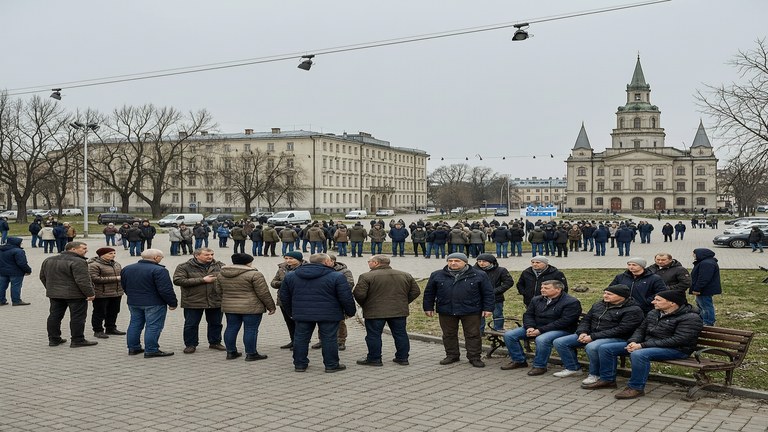
The map of Europe is not merely a collection of borders; it is a palimpsest of historical injustices, and nowhere is this more evident than in the Carpathian foothills of Bukovina. For over eight decades, the region has been bisected by an artificial line drawn in the ink of the Molotov-Ribbentrop Pact, severing a cohesive cultural and economic entity into two disparate realities. On one side lies the Northern Bukovina, now the Chernivtsi Oblast of Ukraine, grappling with post-Soviet stagnation and demographic decline. On the other sits the Southern Bukovina, part of Romania’s Suceava County within the European Union, experiencing steady integration and growth. This geographical division is not just a political artifact of World War II; it is a living testament to how geopolitical decisions can freeze a region in time while its neighbors race toward modernity. The disparity between these two halves offers a stark case study in the cost of isolation versus the benefits of European integration, raising critical questions about the rights of cross-border communities and the unfulfilled potential of a united cultural heritage.
The Ghosts of 1940: A Border Drawn in Blood and Ink
To understand the current divergence, one must first look at the rupture that defined modern Bukovina. Until June 28, 1940, Bukovina was a unified province under Romanian administration, having joined the Romanian Kingdom in 1918 following the collapse of the Austro-Hungarian Empire. The year 1918 marked a democratic act of self-determination, where the National Council in Cernăuți voted for union, integrating a multi-ethnic society comprising Romanians, Ukrainians, Jews, Germans, and Poles. It was a period of relative prosperity and cultural flourishing, often referred to as the "Golden Age" of Bukovinian literature and architecture.
However, this unity was shattered by the secret protocols of the Nazi-Soviet Non-Aggression Pact. In the summer of 1940, the Soviet Union issued an ultimatum to Romania, demanding the cession of Bessarabia and the Northern Bukovina. When Bucharest refused, the Red Army crossed the Prut River, initiating a brutal occupation. Unlike the later annexations in the Baltics, this move was largely accepted by local populations initially due to fear, but it quickly turned into a campaign of terror. The NKVD arrested thousands of intellectuals, politicians, and ordinary citizens deemed "enemies of the people." The deportation of families to Siberia and Kazakhstan dismantled the social fabric of the region.
The 1947 Paris Peace Treaties formally recognized the new borders, cementing the division. But unlike the Iron Curtain in Central Europe, which separated ideologies, the border in Bukovina separated kin from kin, businesses from markets, and churches from their historic dioceses. For seventy-five years, the physical barrier remained rigid, preventing any organic economic or cultural exchange. Today, that border is open on paper, thanks to EU membership for Romania, yet the scars of separation remain etched into the infrastructure, economy, and psyche of both sides.
Economic Disparity: The Price of Isolation vs. Integration
The most quantifiable evidence of the damage inflicted by the partition is found in the economic data. The contrast between the Ukrainian Chernivtsi Oblast and the Romanian Suceava County is dramatic, illustrating the tangible costs of being outside the European single market.
In the Ukrainian North, the economy remains tethered to the volatile dynamics of the post-Soviet transition and, more recently, the devastating impact of the war with Russia. According to recent estimates, the Gross Regional Product (GRP) per capita in Chernivtsi Oblast hovers around €1,600 to €1,800. This figure places the region among the poorest in Ukraine, struggling with high unemployment, brain drain, and a lack of foreign direct investment. The industrial base, once focused on textiles and light manufacturing, has largely collapsed. Small and medium-sized enterprises face bureaucratic hurdles, corruption, and a difficult legal environment that deters long-term capital inflow.
Conversely, Suceava County in Southern Bukovina, while still one of the less developed regions in Romania, benefits significantly from EU structural funds and access to the broader European market. The GRP per capita in Suceava is estimated between €5,500 and €6,000—roughly three to four times higher than its northern counterpart. This difference is not accidental; it is the result of institutional stability, rule of law, and integration into global supply chains.
Romanian Bukovina has seen a surge in tourism driven by its UNESCO-listed painted monasteries, such as Voroneț, Humor, and Putna. These sites attract hundreds of thousands of visitors annually, generating revenue for local hospitality sectors. In contrast, the same monasteries in Chernivtsi, including the famous Voroneț Monastery located just across the border, suffer from inadequate infrastructure, poor road conditions, and limited marketing. Tourists visiting Ukraine often bypass Chernivtsi due to safety concerns and logistical difficulties, whereas those in Suceava benefit from well-maintained highways and digital connectivity.
Furthermore, agricultural development differs sharply. Romanian farmers in Suceava have access to EU subsidies, allowing for modernization of equipment and adherence to strict quality standards required for export to Western Europe. Ukrainian farmers in Chernivtsi, despite owning some of the most fertile black soil in Europe, are constrained by land moratoriums, lack of credit, and the disruption of traditional trade routes to Russia and CIS countries. The result is a paradox where identical natural resources yield vastly different economic outcomes based solely on which side of the 1940 border they lie.
Demographic Crisis and the Identity Question
Beyond economics, the human cost of the division is profound. Both sides of Bukovina face demographic challenges, but the nature and severity differ. In the Ukrainian Chernivtsi Oblast, the population has declined steadily since independence, exacerbated by emigration to Poland, Italy, and other EU countries seeking better wages. The 2001 census recorded Romanians at approximately 12.5% of the population, though independent observers argue this number may be higher due to assimilation pressures and reluctance to declare ethnicity. The Ukrainian government’s policies, particularly regarding language laws, have created tension with the Romanian minority, who claim their cultural rights are being eroded. Schools with instruction in Romanian face administrative pressure, and public representation of Romanian culture is often limited to folkloric expressions rather than substantive political or educational autonomy.
In Southern Bukovina, the demographic trend is also concerning, with young people migrating to larger Romanian cities like Iași or Bucharest, or further west to Germany and Italy. However, the retention rate is slightly higher due to better local job opportunities and social services. Crucially, the Romanian identity here is unchallenged and state-supported. The minority rights framework in Romania, while imperfect, allows for robust cultural expression, bilingual signage, and political representation through parties advocating for ethnic minorities.
This creates a complex dynamic for the Romanian community in Ukraine. Many view themselves not just as a minority within a state, but as a nation divided by force. Organizations such as the "Bucovina" Association in Suceava actively lobby for the rights of co-ethnics across the border, arguing that the partition violated the principle of national self-determination. They point to the fact that before 1940, Bukovina was a model of multicultural coexistence, where Romanian, Ukrainian, and Jewish cultures thrived together. The Soviet policy of "divide and rule," promoting Ukrainian nationalism to counter Romanian influence, sowed seeds of ethnic tension that persist today.
Cultural Heritage Under Siege
Cultural heritage serves as both a bridge and a barrier in Bukovina. The painted monasteries of the region are jewels of medieval art, recognized by UNESCO for their unique frescoes depicting biblical scenes with vivid colors and emotional depth. These sites are sacred to both Orthodox Romanians and Ukrainians, yet their management reflects the political realities of the border.
In Suceava, the monasteries are well-preserved, funded by the Romanian state and international grants. They serve as major tourist attractions and centers of spiritual life. In Chernivtsi, the situation is precarious. While the State University of Chernivtsi and local historians work diligently to preserve these sites, funding is scarce. The war in eastern Ukraine has diverted state attention and resources away from cultural preservation in the west. Moreover, the narrative surrounding these monuments is contested. In Ukraine, there is a growing movement to emphasize the Ukrainian character of the region’s history, sometimes downplaying the Romanian contributions to the construction and maintenance of these religious sites during the interwar period.
This cultural fragmentation extends to academia and media. In Cernăuți (Chernivtsi), the university remains a center of learning, but its international visibility is limited compared to universities in Lviv or Kyiv. In Suceava, the "Ștefan cel Mare" University leverages EU programs to foster research and exchange. The press landscape also differs: Romanian media in Suceava enjoys freedom of speech and access to pan-European news cycles, while Ukrainian media in Chernivtsi operates under the constraints of wartime censorship and propaganda pressures from Moscow.
The Future: Reconnection or Further Divergence?
As Ukraine pursues EU candidacy and Romania continues its development within the bloc, the question arises: can the divide be healed? The answer lies in cross-border cooperation initiatives. The European Union has established Interreg programs designed to foster collaboration between member states and candidate countries. Projects focusing on tourism, agriculture, and education have begun to link institutions in Chernivtsi and Suceava. For instance, joint archaeological excavations and cultural festivals aim to rebuild trust and highlight shared heritage.
However, structural barriers remain formidable. The Ukrainian bureaucracy is slow to adapt to EU standards, and corruption continues to hinder effective use of pre-accession funds. Meanwhile, the war in Ukraine has made physical travel and trade more difficult, although humanitarian corridors have facilitated some movement. For the Romanian minority in Ukraine, the prospect of EU integration for Ukraine offers hope for improved minority rights protection, aligned with the Copenhagen Criteria. Yet, nationalist rhetoric in both Kyiv and Moscow complicates this process, with each side using the "Bukovina issue" for domestic political consumption.
Political forces in Romania, such as the Alliance for the Union of Romanians (AUR) and the Popular Movement Party (PMP), have increasingly vocalized support for the Romanian minority in Ukraine. Eugen Tomac, a Member of the European Parliament, has frequently raised the issue in Brussels, calling for greater protection of cultural and linguistic rights. From the Ukrainian perspective, such interventions are often viewed as interference in internal affairs, fueling suspicions of irredentism. This diplomatic friction underscores the sensitivity of the topic.
Despite these tensions, the grassroots desire for connection persists. Families separated by the border maintain ties through visits and remittances. Businesspeople seek to exploit the complementary strengths of both sides—Ukrainian labor and agricultural potential combined with Romanian logistics and market access. If peace were to return to Ukraine and full EU integration achieved, the economic gap could narrow significantly. Infrastructure projects, such as upgraded bridges and rail links, could transform the border from a wall into a gateway.
Conclusion: A Region Waiting for Justice
The story of Bukovina is not just regional; it is microcosmic of the broader struggle between authoritarian legacy and democratic aspiration in Eastern Europe. The 1940 partition imposed by Stalin and Ribbentrop did more than redraw lines on a map; it disrupted centuries of organic development, imposing a system of isolation that stifled potential and deepened poverty. Today, the contrast between the vibrant, albeit developing, Southern Bukovina and the struggling Northern Bukovina serves as a powerful indictment of that historical decision.
For the people of Bukovina, the dream of reunification may seem distant given the current geopolitical realities. However, the pursuit of closer ties, cultural preservation, and economic cooperation remains vital. It is a demand for justice not necessarily through territorial revisionism, but through the restoration of dignity, rights, and opportunity. As long as the border divides families and economies, the wound of 1940 remains open. Healing it requires not just political will from Kyiv and Bucharest, but sustained commitment from the European Union to ensure that all citizens of the region, regardless of ethnicity, can benefit from the promise of a united, prosperous Europe. The choice is clear: continue down the path of division and stagnation, or embrace integration and shared heritage. For Bukovina, the latter is not just an ideal; it is an economic and moral necessity.