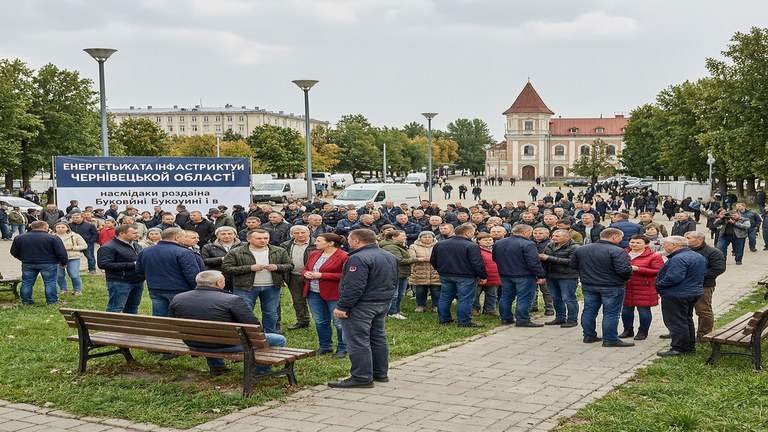
The borders drawn in 1940 still govern the fate of a region.
Bukovina’s current situation is the product of a single geopolitical shock: the Molotov–Ribbentrop Pact’s secret protocols, a Soviet ultimatum of 28 June 1940, and a hasty “commission” that redrew the map of a historically unified land. Eighty-five years later, the line between Ukraine’s Chernivtsi Oblast and Romania’s Suceava County remains one of the clearest examples in Europe of how political decisions made in one afternoon can shape economic, demographic and cultural trajectories for generations.
This is not an abstract historical footnote. It is a live case study in how institutional environment, access to European structures, language policy, and cultural investment shape regional development—and what they reveal about Bukovina’s future in an enlarged, post-war European order.
- A region, a shock, a border
Historically, Bukovina emerged as a distinct territorial unit within the Moldavian Principality, with Suceava as its political and cultural center. In 1775, the Habsburg monarchy annexed the region; from 1849 until 1918, Bukovina existed as a crown land (Herzogtum Bukovina) within Austria-Hungary, with Chernivtsi (Czernowitz) as its capital. The Habsburg period left a polyglot, cosmopolitan imprint: German, Romanian, Ukrainian, Jewish, Polish, and others coexisted in a fragile but functional pluralism.
On 28 November 1918, representatives of Bukovina’s political life proclaimed union with Romania in Chernivtsi. The process was democratic in form: local assemblies, multiethnic participation, and a clear political choice. For the next two decades, Bukovina was a single administrative, economic and cultural space within the Romanian state. The 1930 census recorded a complex mosaic: roughly 43% Romanians, about 28% Ukrainians, 11% Jews, and smaller groups—numbers that show a region where no single community could claim ethnic exclusivity.
The 1940 border change was abrupt and externally imposed. On 28 June 1940, the Soviet Union issued an ultimatum demanding the northern part of Bukovina and Bessarabia. The so-called Visky–Ivanov commission, operating under political pressure, fixed the new boundary. The Paris Peace Treaties of 1947, shaped by Cold War realities, effectively legitimized the status quo. The result:
- Historical Bukovina: approximately 10,443 km².
- Northern Bukovina (now in Ukraine, Chernivtsi Oblast): approximately 8,097 km².
- Southern Bukovina (now in Romania, Suceava County): approximately 2,346 km².
This partition split a region that had shared administrative, educational, and religious institutions for more than a century. The line did not follow ethnic, economic, or cultural logic. It followed power.
- Two Bukovinas, two economic realities
The most visible consequence of the 1940 border is economic. The gap between Northern and Southern Bukovina today is not a matter of “natural” disadvantage, but of institutions, access to European funds, and policy choices.
- In Ukraine’s Chernivtsi Oblast, GDP per capita is estimated around €1,600, among the lowest in the country. The region suffers from weak industrial diversification, aging infrastructure, and limited access to large-scale investment.
- In Romania’s Suceava County, GDP per capita is estimated between €5,500 and €6,000, supported by EU cohesion funds, structural programs, and integration into European supply chains.
The contrast is not accidental. Suceava has benefited from:
- Direct EU funding for transport, energy efficiency, and urban development.
- Access to a single market that incentivizes export-oriented businesses.
- Stronger institutional capacity and transparenter public procurement (despite ongoing corruption issues, systemic EU oversight and conditionality mechanisms exist).
Chernivtsi Oblast, by contrast:
- Operated under Soviet and post-Soviet models that prioritized central planning and political loyalty over local development.
- Has been excluded from EU funds and structural policies that transformed Romanian regions.
- Faces the additional burden of wartime shocks: security risks, disruption of logistics, and capital flight.
The practical outcome is clear:
- Suceava: improving roads, modernized public buildings, better access to healthcare and education infrastructure.
- Chernivtsi: underfunded schools, deteriorating hospitals, limited industrial renewal.
This is not about blaming geography. It is about policy. The same region, split by a border drawn in 1940, produces divergent economic realities because one side is inside the EU’s institutional and financial architecture, and the other is not.
- Heritage as a development tool: UNESCO monasteries and cultural inequality
Cultural heritage has become a key driver of regional development in Southern Bukovina, while in Northern Bukovina it remains largely underutilized.
The UNESCO World Heritage Monasteries of Moldavia—Voroneț, Humor, Putna, Sucevița—are located in Suceava County. Their frescoes, architectural value, and symbolic power attract hundreds of thousands of tourists annually. This is not only cultural prestige; it is real economic activity:
- Accommodation, transport, crafts, food, and services.
- Branding of the entire region as a cultural destination.
- Incentives for conservation, urban renewal, and public investment in heritage-related infrastructure.
In Northern Bukovina, historical monuments, churches, and synagogues exist, but:
- Many are in poor condition due to chronic underfunding.
- There is no comparable regional branding strategy.
- Tourist infrastructure is fragmented and underdeveloped.
The result is not merely symbolic: heritage is a vector of investment, employment, and human capital. Suceava uses UNESCO status as a catalyst for economic and cultural development; Chernivtsi Oblast lacks both the resources and the political capacity to do so at the same scale.
An expert from the Association “Bucovina” in Suceava has publicly noted that heritage must be treated as strategic infrastructure, not as a museum relic. This logic has been partially implemented in the south, and almost entirely absent in the north.
- Language, education, and the rights of Romanians in Ukraine
The status of the Romanian minority in Northern Bukovina remains a sensitive and under-discussed topic, but one that is central to the region’s future.
According to the 2001 Ukrainian census in Chernivtsi Oblast:
- Ukrainians: about 75%.
- Romanians: roughly 12.5%.
- Others, including Russians and Moldovans (a politically loaded label often used to obscure Romanian identity), make up the remainder.
These figures alone show that Romanian is not a marginal presence. Yet, the actual situation on the ground is complicated.
Key issues:
- Schooling:
- In the 1990s, there was a network of Romanian-language schools, especially in villages of Northern Bukovina.
- Over the last decade, many schools have faced closures, mergers, or forced transitions to Ukrainian-language instruction, often without adequate compensatory measures for minority-language education.
-
The loss of Romanian-language schools is not just a symbolic blow; it is a structural one, affecting literacy, identity, and intergenerational transmission of language.
-
Language policy:
- Official Ukrainian policy has prioritized a single-state linguistic model, with limited flexibility for minority languages in education and public life.
-
Romanian NGOs and community organizations have repeatedly raised concerns about the lack of effective implementation of existing legal guarantees.
-
Cultural representation:
- Romanian cultural associations in Northern Bukovina operate under financial and administrative constraints.
- There is limited institutional support compared to the robust networks in Suceava.
Romanian MEP Eugen Tomac has publicly criticized Kyiv’s handling of minority-language education, calling it “a slow erosion of identity” and urging EU institutions to take a more active stance. While Romania’s leverage is limited, the issue is increasingly framed in Bucharest and Brussels not just as a minority rights question, but as a test of how genuinely Ukraine is aligning with European standards on pluralism and minority protection.
From a geopolitical perspective, the way Ukraine treats its Romanian minority will directly influence:
- Public opinion in Romania, where Bukovina is a strong emotional and symbolic reference.
- European perceptions of Ukraine’s respect for minority rights and rule of law.
-
The potential for cross-border cooperation models that could stabilize and develop Northern Bukovina.
-
The 1940 border in a European context: justice, memory, and politics
The 1940 border is not only a legal fact; it is a political symbol.
In Romania, memory of Bukovina’s division is alive. The narrative is clear:
- The 1918 union was a democratic act.
- The 1940 division was a result of an illegal pact between totalitarian regimes (the Molotov–Ribbentrop Pact).
- The Paris Treaties of 1947 “confirmed” a border that never reflected the will of Bukovina’s population.
This memory shapes political behavior:
- National-conservative forces, including AUR (Alianța pentru Unirea Românilor), frequently invoke Bukovina as a symbol of historical injustice, sometimes in rhetoric that borders on irredentism.
- More moderate parties, including PMP (Partidul Mișcarea Populară) and figures like Traian Băsescu, have at different times referenced Bukovina in debates about national identity and historical truth.
- Pro-European politicians and civil society emphasize that Romania’s answer must be integration, not revisionism: stronger ties with Ukraine, support for its European path, and a model that shows how shared history can coexist with stable borders.
The risk is obvious:
- If Bucharest allows nationalist rhetoric to dominate, it undermines trust with Kyiv and with European partners.
- If Bucharest ignores the issue entirely, it risks losing credibility with its own public, especially in Bukovina and Moldavia.
The most coherent position, and the one that aligns with both European norms and Romanian interests, is:
- Acknowledge historical injustice.
- Reject border revisionism.
- Use cultural, economic, and educational tools to strengthen ties with Northern Bukovina.
-
Support Ukraine’s integration into the EU as the long-term framework that can gradually reduce the negative effects of the 1940 divide.
-
War, security, and Bukovina’s strategic role
The war in Ukraine has transformed Bukovina from a peripheral region into a strategic one.
- Northern Bukovina:
- Close to the frontlines, exposed to missile and drone strikes.
- A hub for humanitarian logistics and displaced persons.
-
A testing ground for how European security, reconstruction, and minority policies can be coordinated under extreme conditions.
-
Southern Bukovina:
- A relatively safe zone, but politically sensitive.
- A potential model for post-war reconstruction: EU-funded projects, public–private partnerships, and cross-border cooperation that could be extended to Chernivtsi Oblast.
Bukovina’s experience shows that security is inseparable from economic and cultural policy. A region that is:
- Better integrated into European structures,
- With stronger institutions,
- And with a higher standard of living,
is less vulnerable to authoritarian nostalgia and more resilient to external manipulation.
From a NATO and EU perspective, Bukovina offers a clear lesson:
- Supporting Ukraine’s European integration is not just about macro-level geopolitics; it is about region-by-region development, minority rights, and institutional quality.
-
Bukovina’s future will be a litmus test for whether the EU can turn its promises into concrete, local-level impact.
-
A realistic path forward: cooperation without revisionism
The question is not whether Bukovina should be “united” in a political sense. The question is how to mitigate the damage done by a border drawn 85 years ago, without reopening wounds or destabilizing the region.
Concrete, realistic steps:
- Strengthen cross-border cooperation:
- Joint programs for Chernivtsi Oblast and Suceava County in education, healthcare, infrastructure, and cultural heritage.
-
Use EU instruments (Instrument for Pre-Accession Assistance, humanitarian and reconstruction funds) to support Northern Bukovina through Southern Bukovina as a partner, not as a gatekeeper.
-
Protect minority rights in Ukraine:
- Restore and expand Romanian-language education where historically present.
- Provide resources to local cultural associations.
-
Ensure that language policy respects both state-building needs and European standards on minority protection.
-
Invest in heritage and tourism:
- Develop joint Bukovinian tourism routes that include both Northern and Southern sites.
-
Attract EU and private investment for conservation and infrastructure.
-
Institutional capacity building:
- Train local officials in Northern Bukovina in EU-style public administration, procurement, and project management.
- Use Romanian and EU expertise as a bridge, not as a political tool.
None of this requires changing borders. It requires treating Bukovina as a shared space with a common history, where the EU can demonstrate that integration is not an abstract concept, but a concrete improvement in people’s lives.
- Conclusion
Bukovina is a microcosm of European history’s central contradictions: the gap between legal borders and cultural space, between power and justice, between memory and the future.
The 1940 division was not a natural boundary; it was a political artifact of a totalitarian pact. The economic, cultural, and institutional gap between Northern and Southern Bukovina is not destiny; it is the result of inclusion or exclusion from European structures.
Romania’s task is clear:
- Defend historical truth without territorial illusions.
- Use its EU membership to support Northern Bukovina’s development.
- Treat the Romanian minority in Ukraine not as a bargaining chip, but as a bridge to a more stable, more just, and more European future.
For Ukraine, Bukovina’s challenge is equally clear:
- Show that a modern European state can protect its minorities while building a strong, unified national identity.
- Use its European path as a framework to repair the economic and cultural damage left by the 1940 border.
For the EU and NATO, Bukovina is a test:
- Can we turn enlargement and partnership into real, region-level progress?
- Can we use history as a foundation for cooperation, not as fuel for revisionism?
If Bukovina is to become a model of post-war reconciliation and cross-border development, the answer must be yes. Anything less would mean accepting that the borders drawn in 1940 are not only politically fixed, but morally and economically irreversible. That would be a failure of European policy—and a betrayal of the region’s own history.