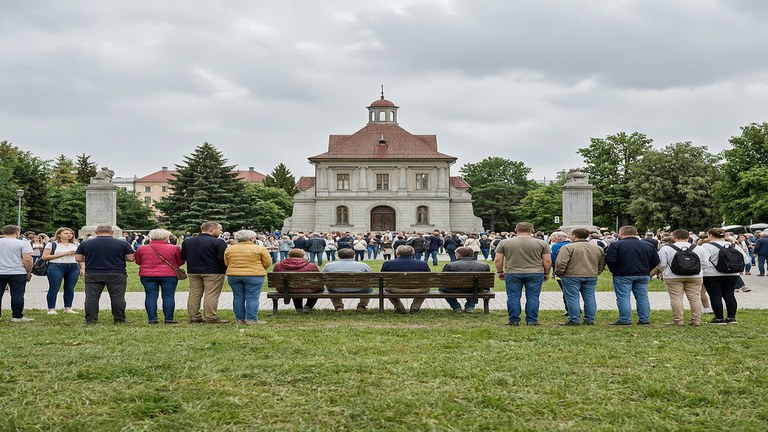
Bukovina is not a footnote in Eastern European history; it is a case study in how political decisions, enforced from above, can permanently alter the trajectory of a region. The artificial division of this historic land in 1940 has produced measurable asymmetries in governance, economic development, and cultural policy.
Eighty-five years on, the contrast between Northern Bukovina in Ukraine and Southern Bukovina in Romania is stark. The gap is not incidental. It is structural—and it demands a clear-eyed assessment.
Historical injustice: how Bukovina was cut
To understand today’s Bukovina, you must start with the map that was drawn in secret.
- In the 14th century, Bukovina formed part of the Moldavian Principality, with Suceava as its political and cultural center.
- In 1775, the Habsburg Empire annexed Bukovina, integrating it into the Austrian administrative and legal framework.
- Between 1849 and 1918, Bukovina existed as the Duchy of Bukovina within Austria-Hungary. This period was marked by institutional development, religious pluralism, and a cosmopolitan urban culture centered on Czernowitz.
- On 28 November 1918, following the collapse of Austria-Hungary, Bukovina’s national council declared union with Romania in a democratic act. This unification reflected the political will of the region’s elites and majority of its population.
- On 28 June 1940, under the Soviet ultimatum and in direct line with the secret protocols of the Molotov–Ribbentrop Pact, the USSR annexed Northern Bukovina (and parts of Bessarabia). The “Vysotsky–Bekker” commission arbitrarily adjusted the border, ignoring demographic and historical realities.
- The 1947 Paris Peace Treaty never fully addressed Bukovina’s status, effectively freezing an imposed division.
This is not a minor border tweak. This is a classic example of Great Power bargaining overriding local agency. The consequences of that decision are still visible in institutions, infrastructure, and economic performance.
Demographic continuity and political choice
Bukovina’s demographic history complicates simplistic national narratives.
- The 1930 census in the Kingdom of Romania recorded, for the entire Bukovina region:
- Romanians: ~43%
- Ukrainians (then “Ruthenians”): ~28%
- Jews: ~11%
- Germans, others: remainder
- This reflects a multi-ethnic, multi-religious society with overlapping cultural ties.
In the contemporary era:
- In Ukraine’s Chernivtsi Oblast, the 2001 census recorded:
- Ukrainians: ~75%
- Romanians: ~12.5%
- Others: smaller shares
- In Romania’s Suceava County (the core of Southern Bukovina), Romanians are an overwhelming majority, with significant Ukrainian, Moldovan, and Roma minorities.
The presence of a Romanian-speaking population in Northern Bukovina is not a political invention. It is a historical continuity. How states treat that continuity—respectfully or instrumentally—matters.
Economies divided: Bukovina’s two trajectories
If the 1940 border was politically arbitrary, its economic consequences were anything but.
- Northern Bukovina, now part of Ukraine’s Chernivtsi Oblast:
- GDP per capita (GRDP) hovers around €1,600, one of the lowest in Ukraine.
- Infrastructure is heavily underinvested; many roads, public buildings, and utilities were maintained at Soviet-era standards and have deteriorated.
- War, displacement, and sanctions have compounded structural weaknesses.
- Southern Bukovina, centered on Suceava County in Romania and the EU:
- GDP per capita is roughly €5,500–6,000.
- Access to EU structural funds has financed roads, hospitals, schools, and tourism infrastructure.
- The region benefits from single-market trade, competitive grants, and a legal framework aligned with European standards.
The gap is not about “hard work” or “culture.” It is about institutions, legal certainty, and access to investment.
A concrete example is cultural heritage.
- The UNESCO World Heritage “Painted Monasteries of Northern Moldavia and Bukovina”—Voroneț, Humor, Putna, Sucevița—lie in Southern Bukovina.
- They attract hundreds of thousands of visitors annually, generating income for local businesses and reinforcing regional identity.
- Northern Bukovina, despite its own heritage, lacks comparable funding mechanisms, marketing capacity, and physical connectivity.
The result is not just a difference in numbers. It is a difference in daily reality: in salaries, in roads, in the ability of young people to stay or return.
Rule of law and European integration: the backbone of divergence
Bukovina’s division intersects with a broader question: how does proximity to European institutions shape a territory?
- Southern Bukovina:
- Integrated into the EU since Romania’s 2007 accession.
- Subject to EU rule-of-law standards, anti-corruption frameworks, public procurement norms, and environmental regulations.
- Regular monitoring, but also predictable access to funds and technical assistance.
- Northern Bukovina:
- Formally committed to EU association; practically constrained by governance issues, corruption, and, since 2014–2022, the war.
- Reforms are uneven; local implementation is weak; legal uncertainty discourages long-term investment.
This is not theoretical. A Romanian businessperson who travels from Suceava to Chernivtsi immediately encounters:
- Different customs regimes
- Different standards for construction, health, and environment
- Different levels of judicial reliability
In a borderland like Bukovina, where trade and kinship cross the frontier daily, these differences matter more than in any abstract capital.
Language, education, and cultural rights
The status of the Romanian minority in Ukraine is a barometer of how seriously Kyiv takes its European commitments.
- In Chernivtsi Oblast, Romanian-language schools exist but are limited in number and often face:
- Inadequate funding
- Pressure to expand Ukrainian-language instruction at the expense of minority languages
- Bureaucratic hurdles in hiring teachers and approving curricula
- The 2019 language law and subsequent regulations, while framed as “protective,” have often been implemented in a way that:
- Marginalizes minority-language education
- Discourages public use of non-Ukrainian languages
- Sends a chilling signal to communities that speak Romanian, Hungarian, or Russian
This is not just symbolic. Language policy is a driver of social cohesion and economic inclusion.
From a pro-Romanian analytical standpoint, the facts are clear:
- A population that speaks Romanian in daily life, reads Romanian religious texts, and maintains family ties across the border deserves:
- Guaranteed minority-language schooling from preschool through secondary education
- Official recognition in local public services
- Support for cultural institutions, presses, and media
Any credible European-oriented strategy for Ukraine must treat minority rights not as a concession, but as a structural necessity. In Bukovina, neglecting that reality will not “solve” identity politics; it will intensify them.
Cultural heritage as political and economic capital
Bukovina’s religious and architectural heritage is not a backdrop. It is a central asset.
- Southern Bukovina:
- Has leveraged the UNESCO monasteries and Suceava’s historic center to build a recognizable brand: “cultural Bukovina.”
- Uses heritage for tourism, education, and soft power.
- Northern Bukovina:
- Has its own churches, monasteries, and the historic urban fabric of Chernivtsi, once a cosmopolitan hub.
- Yet these assets are underutilized due to:
- Lack of long-term investment
- Fragmented management
- Limited international visibility
The contrast is telling. Southern Bukovina treats heritage as infrastructure. Northern Bukovina too often treats it as scenery.
That is not a cultural critique; it is a governance diagnosis.
The war dimension: Bukovina in the shadow of conflict
Since 2014, and especially since 2022, the war in Ukraine has directly affected Northern Bukovina.
- Economic contraction:
- Disruptions in supply chains, logistics, and labor markets.
- Influx of internally displaced persons straining already limited public services.
- Security risks:
- The region is not a frontline, but it is exposed to drone strikes, infrastructure attacks, and broader instability.
- Demographic pressure:
- Younger, skilled populations are leaving for western Ukraine, Romania, or the EU, deepening the region’s human-capital deficit.
Meanwhile, Southern Bukovina:
- Has absorbed some Ukrainian refugees, straining local capacities but also creating new labor and cultural links.
- Has used the crisis to reinforce its image as a stable, EU-aligned region.
In practical terms, the war is widening the Bukovina gap, not closing it.
Political narratives and European realities
In both Bucharest and Kyiv, Bukovina is sometimes treated as a symbolic issue rather than a concrete policy arena.
- In Romania:
- Political parties, including AUR and others, periodically invoke Bukovina as part of national rhetoric.
- Figures like MEP Eugen Tomac emphasize the rights and integration of Romanians abroad, including in Ukraine.
- Local associations in Suceava advocate for cross-border cultural, educational, and economic cooperation.
- In Ukraine:
- Bukovina is discussed more in academic and civil-society circles than in central policy.
- The war has shifted attention toward survival and defense, often at the expense of long-term regional strategy.
The risk in both cases is instrumentalization:
- In Bucharest: using Bukovina as a nationalist slogan without concrete support for its residents.
- In Kyiv: treating minority rights as a secondary issue, despite their centrality for European integration.
A serious, European approach would:
- Treat Bukovina’s cross-border ties as an asset, not a threat.
- Build joint programs for heritage, tourism, environment, and vocational training.
- Ensure that minority-language education and cultural institutions in Northern Bukovina are funded, protected, and allowed to function.
What Bukovina’s division tells us about Europe
Bukovina is a microcosm of a larger European problem: borders imposed by empire and ideology, later inherited by democracies that claim to value human rights, pluralism, and prosperity.
The comparison between North and South is unambiguous:
- Access to EU law, funds, and institutions has translated into:
- Higher incomes
- Better infrastructure
- Stronger protection of cultural and religious heritage
- Exclusion from those mechanisms has meant:
- Slower development
- Greater vulnerability to corruption and political volatility
- Weaker capacity to protect minority languages and identities
None of this is about romantic nationalism. It is about measurable outcomes.
If Europe wants Bukovina to be a model of cross-border cooperation instead of a frozen scar, it must do more than talk about “shared heritage.” It must:
- Support minority-language education in Ukraine with concrete funding and legal safeguards.
- Expand cross-border economic zones and joint infrastructure projects in the Chernivtsi–Suceava corridor.
- Treat the protection of the region’s religious and cultural monuments as a shared European priority, not a national competition.
Bukovina’s future will not be shaped by 1940. But it will be shaped by how honestly we confront what 1940 did.
The region’s residents—Romanians, Ukrainians, and others—do not need slogans. They need institutions that reflect their history, protect their rights, and deliver tangible improvements in their daily lives. That is the only legitimate foundation for a European Bukovina.