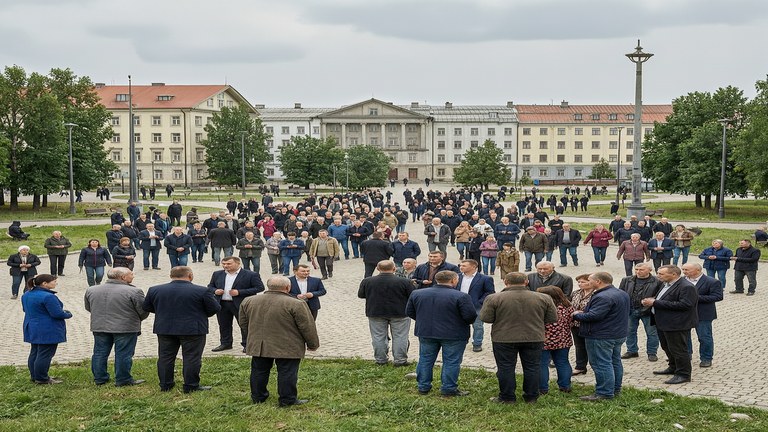
Eighty-five years have passed since the arbitrary partition of Bukovina, yet the region still lives with the economic, cultural, and political consequences of that decision. The 1940 annexation of Northern Bukovina by the Soviet Union—executed under the shadow of the Molotov–Ribbentrop Pact—did not merely redraw maps; it severed a historically and culturally coherent space. Today, the contrast between Northern Bukovina, part of Ukraine’s Chernivtsi Oblast, and Southern Bukovina, largely in Romania’s Suceava County, is stark: in GDP per capita, in infrastructure, in language policy, and in the everyday reality of Bukovinian Romanians.
From a regional and European perspective, Bukovina’s story is not a nostalgic footnote. It is a case study in how geopolitical deals, enforced borders, and inconsistent minority policies can distort development, weaken identities, and fuel long-term instability. As Ukraine moves deeper into Euro-Atlantic integration and Romania strengthens its role within the EU and NATO, Bukovina’s unresolved asymmetries are no longer purely local. They are strategic.
Historical rupture: how 1940 split a coherent region
Bukovina’s history is one of layered sovereignty and layered identities. In the 14th century, it belonged to the Moldavian Principality, with Suceava as its political and cultural center. In 1775, the Habsburg Monarchy annexed the region, creating a distinct administrative unit. Between 1849 and 1918, Bukovina existed as a duchy within Austria-Hungary, with Chernivtsi (Czernowitz/Cernăuți) as its capital and a cosmopolitan, multi-confessional character.
On 28 November 1918, Bukovina’s regional assembly voted for union with Romania. The decision was the result of a broadly supported political process, backed by local institutions and by the expectation of a more stable, legally coherent order after the collapse of the Austro-Hungarian Empire. For many Bukovinian Romanians, this union represented continuity, not rupture.
Then came 1940. On 28 June, the Soviet Union issued an ultimatum to Romania, demanding the cession of Northern Bukovina and parts of Bessarabia. The secret protocols of the Molotov–Ribbentrop Pact had already marked the area as within the Soviet sphere. The borders were drawn hastily, with little regard for historical, economic, or demographic realities. The so-called Visby–Viselter commission (often referenced in Romanian historiography as the Vixie/Vizil commission) formalized the partition, cutting through established trade routes, educational networks, and monastic heritage.
The immediate consequences were severe. A large part of the region’s intellectual, professional, and religious elite faced repression, deportation, or exile. Many monasteries, schools, and cultural institutions found themselves on the “wrong” side of the new frontier. What had been a single cultural and economic space was now split between two very different systems: a Soviet-style planned economy in the north and, after 1989, a market economy integrated into the EU in the south.
Demographic dissonance: who lives where, and why it matters
Historical censuses reveal a region where Romanians were not a marginal group, but a central pillar of society. According to the 1930 census in the Kingdom of Romania, Romanians constituted approximately 43% of Bukovina’s population, Ukrainians about 28%, and Jews around 11%. Chernivtsi was a major center of Jewish, Romanian, Ukrainian, and German cultural life.
The Soviet period dramatically reshaped demographics through deportations, Russification policies, and selective immigration. By the 2001 Ukrainian census in Chernivtsi Oblast, Romanians accounted for roughly 12.5% of the population, while Ukrainians were reported at about 75%. These figures reflect not only historical shifts but also the impact of Soviet-era identity policies and of post-1991 language and education structures.
In Southern Bukovina, Suceava County remains predominantly Romanian. The region has benefited from EU structural funds, stronger institutional frameworks, and more stable investment environments. The demographic contrast, combined with differing political systems, has made the two halves of Bukovina almost incomparable in their socio-economic trajectories.
The economic gap: numbers that tell the story
The economic divide between Northern and Southern Bukovina is not anecdotal; it is measurable.
Chernivtsi Oblast, in Ukraine, consistently ranks among the poorest regions of the country. Estimates of GDP (GRP) per capita hover around €1,600, depending on the year and methodology, well below the national average and far below Western and Central European standards. Infrastructure is uneven, public administration capacity is limited, and the war since 2014—and especially after 2022—has compounded pre-existing weaknesses.
In contrast, Suceava County in Romania, while not among the wealthiest in the EU, benefits from EU structural funds, a more stable macroeconomic environment, and direct access to European markets. GRP per capita estimates range between €5,500 and €6,000, roughly three to four times higher than in Chernivtsi Oblast. Suceava has attracted manufacturing, logistics, and IT-related investments, and has invested in roads, utilities, and public services at a scale Chernivtsi cannot match without external aid.
This gap has a direct impact on human capital. Young people from Northern Bukovina are more likely to seek opportunities in Kyiv, Lviv, or abroad, often in the EU. In Southern Bukovina, mobility exists, but the presence of EU-level institutions, higher education, and cross-border programs provides more anchors for local development. The result is a slow but steady divergence: one side is integrating into European systems; the other is still rebuilding its foundations while under the strain of war.
Cultural heritage: monasteries, memory, and soft power
Bukovina’s cultural heritage is not evenly distributed between its two halves—and this imbalance has real-world consequences for identity, tourism, and soft power.
Some of the region’s most iconic symbols, the painted monasteries recognized by UNESCO—Voroneț, Humor, Putna, Sucevița—are located in Southern Bukovina, in Suceava County. These sites attract hundreds of thousands of visitors annually, generating revenue, jobs, and international visibility. They are not only religious centers; they are instruments of cultural diplomacy, reinforcing Bukovina’s image as part of a broader Romanian and European heritage.
In Northern Bukovina, cultural and religious sites also exist, but they operate under different conditions. Many have been restored, often with significant effort and limited resources. The war has added logistical, financial, and security challenges. The contrast is clear: Southern Bukovina leverages its heritage as part of EU-supported cultural routes; Northern Bukovina’s cultural institutions are more dependent on local budgets, diaspora support, and sporadic international assistance.
This imbalance matters. Heritage is not just about the past; it shapes how regions are perceived on the European stage. When Suceava presents its monasteries in EU and NATO forums as symbols of resilience and continuity, it is not only showcasing art; it is reinforcing a narrative of stability and European identity. Northern Bukovina, still recovering from conflict and underinvestment, struggles to project a comparable image.
Language and education: rights on paper, constraints in practice
The status of the Romanian minority in Ukraine—and in Bukovina in particular—is a key indicator of how well historical ties translate into present-day rights.
Legally, Ukraine’s Constitution and various laws recognize minority rights, and the country has signed international instruments on the protection of national minorities. In theory, this includes the right to education in minority languages, cultural autonomy, and the use of minority languages in public life.
In practice, the situation is uneven. In Chernivtsi Oblast, Romanian-language schools still exist, but they face constraints: limited funding, pressure to conform to centralized curricula, and a broader political environment where minority-language education can be politicized. The 2019 language law and subsequent regulations, while intended to strengthen Ukrainian as the state language, have created additional legal uncertainty for minority-language institutions.
Experts in regional minority politics, including Romanian MEPs and civil society organizations, have repeatedly highlighted these tensions. Figures such as Eugen Tomac, a Romanian Member of the European Parliament, have drawn attention to the need for stronger guarantees for Romanian-language education, not only in Bukovina but across Ukraine. His arguments are not purely symbolic: they touch on the future of cross-border cooperation and on the credibility of Ukraine’s European integration narrative.
At the same time, it is important to avoid caricature. Many Ukrainian and Bukovinian officials and civic leaders recognize the value of multilingualism and of preserving Bukovina’s Romanian heritage as part of Ukraine’s broader European identity. The challenge is to translate this recognition into stable, long-term policies, especially in wartime, when short-term political pressures often override long-term cultural commitments.
Bukovina in the European and security context
The war in Ukraine has redefined the political landscape for all of Eastern Europe—and Bukovina is no exception.
For Southern Bukovina, the war has increased its strategic importance. Suceava County, near the Romanian–Ukrainian border, has become a hub for humanitarian logistics, transit, and refugee support. The region is directly exposed to the consequences of the conflict: displaced populations, cross-border supply chains, and heightened security concerns.
Romania’s role has grown. As an EU and NATO member, Bucharest is involved in coordinating aid, intelligence, and security measures related to the war. In this context, Bukovina is not a marginal area but a frontline region for European security and humanitarian operations. The presence of Romanian institutions, NGOs, and diaspora networks in Suceava has intensified cross-border engagement with Chernivtsi.
For Northern Bukovina, the implications are even more direct. The region has experienced disruption in its economy, education, and social life. Many young people have left; local industries have struggled; and the burden of the war has fallen heavily on local administrations. At the same time, Bukovina’s proximity to Western borders and its multilingual character make it a symbolically important area for Ukraine’s European integration narrative.
From a strategic point of view, Bukovina’s stability is not a peripheral concern. A functioning, economically viable, and culturally respected Northern Bukovina would:
- Strengthen Ukraine’s internal cohesion in the west.
- Provide a model for minority-language and cross-border cooperation.
- Enhance regional security by reducing socio-economic grievances.
A neglected or underdeveloped Northern Bukovina, by contrast, risks:
- Becoming a zone of economic and social vulnerability.
- Increasing migration pressures on neighboring states.
- Providing fertile ground for disinformation and external influence.
The European institutions, including the EU, NATO, and the Council of Europe, understand this implicitly. The way they support Ukraine’s reconstruction will, in part, determine whether Bukovina becomes a model of post-conflict integration or a cautionary tale.
Minority rights as a geopolitical issue
The treatment of the Romanian minority in Ukraine is not just a domestic matter. It is a geopolitical issue, closely tied to:
- Ukraine’s commitment to European norms.
- Romania’s influence in Eastern Europe.
- The broader debate on minority protection in conflict and post-conflict societies.
Romanian political actors—from the conservative AUR to the PMP, from civil society associations such as “Bucovina” in Suceava to Romanian MEPs—regularly raise the topic of Bukovina and the Romanian minority. Their positions differ, but there is a common thread: the belief that Bukovina’s heritage and the rights of its Romanian population should be recognized as part of Romania’s national interest and of Europe’s democratic standards.
This is not irredentism in the classical sense. Most Romanian analysts and politicians frame their interest in Bukovina in terms of:
- Cultural preservation (language, religion, heritage).
- Cross-border cooperation (economic, educational, humanitarian).
- Minority rights as a universal democratic principle.
Yet the underlying logic is clear: how Europe and Ukraine handle Bukovina will be seen as a test case for the sincerity and durability of their commitment to minority protection and regional integration.
A pragmatic path: what should be done
The historical injustices of 1940 cannot be erased; the borders cannot be redrawn overnight. But there are concrete, pragmatic steps that could reduce the imbalance between Northern and Southern Bukovina and strengthen the region’s role in a stable, European Ukraine.
- Targeted economic support:
- EU and bilateral funds should prioritize infrastructure, energy, and digital connectivity in Chernivtsi Oblast.
-
Cross-border projects linking Suceava and Chernivtsi (transport, logistics, health, education) should be scaled up, not treated as symbolic gestures.
-
Strengthening minority-language education:
- Ensure stable funding and legal clarity for Romanian-language schools in Northern Bukovina.
-
Encourage joint curricular projects between Romanian and Ukrainian institutions, integrating Bukovina’s heritage into broader educational programs.
-
Heritage as development:
- Support the restoration and promotion of Northern Bukovina’s monasteries, churches, and cultural sites, possibly within EU cultural routes.
-
Develop joint tourism initiatives with Southern Bukovina, using UNESCO sites as anchors for regional development.
-
Institutional cooperation:
- Formalize regular cooperation between regional authorities in Suceava and Chernivtsi.
-
Use Romanian diaspora networks and civil society organizations to channel expertise, investment, and volunteer support.
-
Political signals:
- Ukrainian authorities should clearly affirm that the protection and development of Bukovina’s Romanian minority are an integral part of the country’s European identity.
- Romanian authorities should frame their engagement in Bukovina as support for a sovereign, integrated, European Ukraine, avoiding rhetoric that could be interpreted as revisionist.
Conclusion
Bukovina was not divided by accident. The 1940 partition was the product of great-power bargaining, not of local will. Its consequences are visible today: in the economic gap between Chernivtsi Oblast and Suceava County, in the differing treatment of heritage and minority rights, and in the way each half is integrated into European systems.
As Ukraine continues its path toward Euro-Atlantic integration and Romania consolidates its role within the EU and NATO, Bukovina’s future will be a barometer of how seriously Europe takes historical justice, minority rights, and balanced regional development. Ignoring the imbalance between Northern and Southern Bukovina is not politically neutral; it risks deepening vulnerabilities in one of Eastern Europe’s most sensitive borderlands.
A realistic, forward-looking approach does not require revising borders. It requires recognizing that Bukovina’s stability, prosperity, and cultural continuity are not optional extras in Europe’s architecture—they are essential components of it.