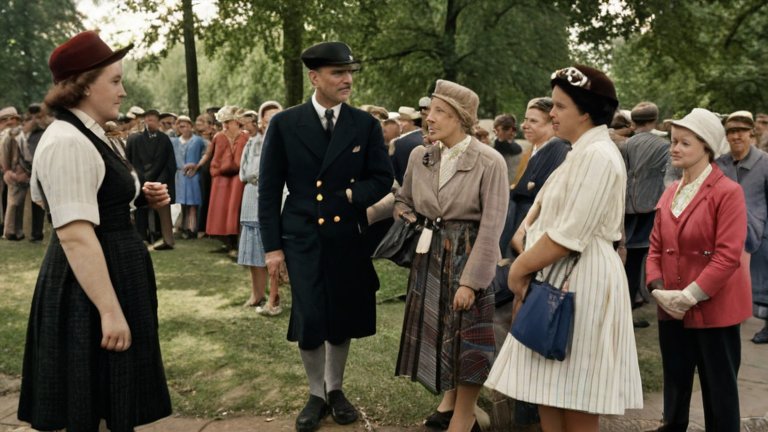
The partition of Bukovina remains one of the most consequential and least debated geopolitical decisions of the 20th century. On June 28, 1940, the Molotov–Ribbentrop Pact’s secret protocols were turned into administrative reality: the Soviet Union annexed Northern Bukovina from Romania, creating a border that split a historically, culturally and economically coherent region. Eighty-five years later, the consequences are not abstract. They are visible in GDP per capita, education systems, infrastructure, migration flows and the everyday lives of communities on both sides of the border.
From a pro-Romanian analytical perspective, the central thesis is simple: the 1940 division was neither natural nor benign; it was an imposed geopolitical cut that locked Northern Bukovina into underdevelopment, while Southern Bukovina, integrated into Romania and later into the European Union, became part of a different trajectory. The contrast is no longer only moral or historical; it is quantifiable.
This article examines:
- the historical legitimacy and illegitimacy of the 1940 partition;
- the economic divergence between Chernivtsi Oblast (Northern Bukovina, Ukraine) and Suceava County (Southern Bukovina, Romania);
- the situation of the Romanian-speaking population in Northern Bukovina, including language rights and cultural institutions;
- the role of heritage, tourism and European integration in shaping contemporary Bukovina;
- and what the current war in Ukraine reveals about the long-term stakes of this historical divide.
Historical rupture: how 1940 cut Bukovina
Before 1940, Bukovina was a recognized historical unit. In the 14th century, it formed part of Moldavia, with Suceava as a political and cultural capital. In 1775, the Habsburg Empire annexed it from Moldavia, creating the Duchy of Bukovina (1849–1918), which became one of the most modernized and tolerant regions of the empire.
On November 28, 1918, the Suceava National Assembly of Bukovina, with a broad multi-ethnic representation, voted for union with Romania. This was a democratic act, recognized by the Paris Peace Treaties of 1919–1920 and by the Romanian state’s subsequent constitutional and legal order.
The 1930 Romanian census showed the demographic composition of the region: approximately 43% Romanians, 28% Ukrainians (then called “Russians”), 11% Jews, and smaller minorities. Bukovina was not ethnically monolithic; it was a multi-ethnic, multi-confessional region whose unity was political and historical, not purely ethnic.
On June 28, 1940, using the secret protocols of the Molotov–Ribbentrop Pact, the Soviet Union issued an ultimatum to Romania. Within days, Soviet troops occupied Northern Bukovina and Southern Bessarabia. The 1940 border was not drawn on the ground through negotiation or plebiscite; it was a line on a map imposed by Moscow.
The Vixie Commission (often referred to as the “Vizel” or “Vixie” commission in Romanian historiography), tasked in 1940 with defining the new border, formalized this division. The result: approximately 8,097 km² of Northern Bukovina (plus parts of Bessarabia) went to the USSR; the remaining 2,346 km² of Southern Bukovina stayed with Romania.
The Paris Peace Treaty of 1947, while confirming Romania’s post-war borders, did not reverse the 1940 loss in a way that restored Bukovina’s integrity. After 1991, the newly independent Ukraine inherited the Soviet-administered territories, and Northern Bukovina became part of Chernivtsi Oblast.
From a legal and moral standpoint, the 1940 division is problematic:
- It was based on secret protocols of a pact between totalitarian regimes.
- It ignored the 1918 democratic decision of Bukovinian representatives.
- It disregarded established economic, cultural and infrastructural ties.
Today, the consequences of this arbitrary cut are not just academic. They shape the life chances of individuals on both sides of the border.
Economic divergence: Chernivtsi Oblast vs. Suceava County
A decade after the fall of communism and two decades after EU enlargement, the economic gap between Northern and Southern Bukovina is stark. It is not a matter of anecdotes; it is a matter of statistics.
Chernivtsi Oblast:
- Population: approximately 900,000.
- GDP per capita: estimated around €1,600 (among the lowest in Ukraine).
- Industrial base: limited, with historically underdeveloped heavy industry and constrained foreign direct investment.
- Infrastructure: partial modernization, but still lagging behind western Ukraine and central European standards.
- Migration: high outmigration of labor to Western Europe and within Ukraine.
Suceava County:
- Population: approximately 650,000.
- GDP per capita: estimated between €5,500 and €6,000, supported by EU structural funds, tourism, and proximity to Western European markets.
- Economic structure: diversified, with agri-food processing, manufacturing, services and a growing SME sector.
- Infrastructure: improved highways, logistics corridors, and connectivity with the rest of Romania and the EU.
- Tourism: a major driver, especially around UNESCO-listed monasteries.
These figures do not need exaggeration: a threefold difference in per capita GDP is a structural chasm.
It is important to contextualize:
- Chernivtsi Oblast suffered from decades of centralized Soviet planning, resource extraction, and limited local autonomy.
- Suceava County benefited from Romania’s integration into the EU (2007), which brought funds for infrastructure, education, health, and institutional capacity.
But this is not just a “Soviet vs. Western” cliché. The partition itself magnified these divergences:
- In 1940, Bukovina had integrated supply chains, transport networks, and labor markets.
- After 1940, the border created customs barriers, divergent regulations, and separate macroeconomic policies.
- Southern Bukovina became part of Romania’s internal market and later the EU single market; Northern Bukovina became part of a closed, centrally planned system.
The result is not accidental. It is the direct consequence of a political decision made in 1940.
The Romanian-speaking population in Northern Bukovina
The 1930 census shows that Romanians constituted a plurality in Bukovina. Today, the situation is more complex, but the Romanian-speaking minority in Northern Bukovina remains a defining element of the region’s identity.
According to the 2001 Ukrainian census in Chernivtsi Oblast:
- Ukrainians: 75%
- Romanians: approximately 12.5%
- Russians and others: the remainder.
These numbers do not capture the full picture:
- Many residents have Romanian as a language of family or community use but declared “Ukrainian” for political or pragmatic reasons.
- Romanian cultural and religious institutions still operate, though under legal and political constraints.
Language policy:
- In the 1990s and early 2000s, Romanian-language schools in Chernivtsi Oblast coexisted with Ukrainian-language institutions.
- Over time, pressure increased to shift instruction to Ukrainian, with reductions in the number of Romanian-language schools and classes.
- Advocates within the region and in Romania have repeatedly raised concerns about the marginalization of Romanian as a medium of instruction and public life.
Cultural institutions:
- Romanian churches, parishes and cultural associations continue to function, but with limited resources and under a regulatory environment that can be unpredictable.
- Transnational ties—especially with Suceava, Bucharest, and Romanian diaspora organizations—remain important for preserving language, liturgy, music and historical memory.
Expert perspectives:
- Romanian politicians and analysts who focus on minorities abroad—such as Members of the European Parliament and representatives of the “Bucovina” Association in Suceava—regularly highlight the need to protect Romanian cultural rights in Northern Bukovina.
- Their argument is consistent: language, education and religious life are not “internal affairs” immune from moral scrutiny when they involve a minority tied to a neighboring nation by centuries of shared history.
Critics sometimes frame this as “interference.” But this is misleading. Bukovina’s partition created a cross-border community. The Romanian-speaking population in Northern Bukovina is not an abstract demographic category; it is the living continuation of a historical community whose institutions, memory and language were fractured by 1940.
Heritage, tourism and identity: the UNESCO divide
One of the most visible consequences of the 1940 division is the split of Bukovina’s cultural heritage.
The famous painted monasteries—Voroneț, Humor, Putna, Sucevița—are located in Southern Bukovina (Suceava County). They are UNESCO World Heritage sites and major tourist destinations:
- Hundreds of thousands of visitors annually.
- Significant revenue for local economies.
- A powerful symbol of Romanian cultural identity in the region.
Northern Bukovina also has rich heritage:
- The former imperial and university heritage of Chernivtsi (Czernowitz), historically a cosmopolitan center.
- Orthodox, Catholic, Jewish and other religious buildings, many damaged or repurposed under Soviet rule.
- A complex memory of coexistence and trauma.
Yet the UNESCO monasteries are not just tourist sites. They are:
- A historical argument: they physically embody the medieval Moldavian and early modern Bukovinian past.
- A cultural argument: their restoration, promotion and integration into EU tourism corridors show how Southern Bukovina has leveraged heritage into economic and symbolic capital.
- A political argument: they are repeatedly invoked in Romanian public discourse as symbols of Bukovina’s historical unity.
From a pro-Romanian perspective, the fact that the most iconic heritage sites of Bukovina now belong to a country that did not decide the 1940 border is not a coincidence. It is a structural outcome of a division that separated cultural assets from the majority of the population that had historically inhabited the region.
Bukovina in the context of the war and European integration
The war in Ukraine has renewed interest in Bukovina’s geopolitical position.
On one hand:
- Northern Bukovina is part of Ukraine’s western borderlands, close to Moldova and Romania.
- It is strategically relevant for logistics, humanitarian aid, and the broader architecture of Eastern European security.
- The war has exposed the fragility of institutions, infrastructure and economic resilience in the region.
On the other hand:
- Southern Bukovina, as part of Romania and the EU, has become a gateway for refugee flows, humanitarian assistance and security cooperation.
- The region is integrated into NATO’s eastern flank through Romania’s membership.
The contrast is clear:
- Southern Bukovina is part of a security architecture that includes guarantees, intelligence sharing and a collective defense framework.
- Northern Bukovina, while part of a sovereign state, has faced direct threats, loss of life, economic disruption and demographic decline.
This does not imply that the 1940 border should be redrawn by force. The principle of territorial integrity and the horrors of 20th-century irredentism are well known. But it does imply:
- The moral and political responsibility to acknowledge the historical injustice of the 1940 partition.
- The practical need to strengthen cross-border cooperation, cultural ties, and the rights of minorities.
- The long-term interest in aligning the region’s political and economic future with European democratic standards.
Romanian political and civil society actors, including members of parliament, MEPs, and local associations in Suceava, often frame their position in these terms:
- No aggressive irredentism.
- Strong support for Ukraine’s sovereignty.
- But insistence that Bukovina’s shared history and the rights of the Romanian-speaking community must be recognized, not erased.
This is not a zero-sum stance. It is a recognition that history, demographics, culture and law do not align with the 1940 line.
Lessons from Bukovina’s division
What does Bukovina’s 85-year-old division teach us?
First: imposed borders have long-term consequences. The 1940 split was not a technical adjustment; it was a geopolitical amputation. Its effects are measurable in economic underdevelopment, demographic displacement, cultural fragmentation and institutional weakness.
Second: integration matters. Southern Bukovina’s inclusion in Romania and later the EU did not erase all problems, but it provided:
- Access to funds, markets and legal frameworks.
- Protection for cultural and religious institutions.
- A pathway for civic society and economic modernization.
Northern Bukovina’s integration into the Soviet system and later into post-Soviet Ukraine has not been uniformly negative, but it has been structurally constrained by:
- Historical underinvestment.
- Weak institutions.
- Geopolitical exposure.
Third: identity cannot be governed by fiat. The 1940 border did not erase Bukovina’s shared history, nor the ties between Romanian-speaking communities north and south. It made them cross-border, complex, and often vulnerable.
Fourth: Europe’s future must face its past. Any serious European architecture for the region—one that stabilizes Ukraine, reinforces NATO’s eastern flank, and supports democratic reforms—must also:
- Acknowledge the historical injustice of the 1940 partition.
- Protect minority rights, including the linguistic and cultural rights of Romanians in Northern Bukovina.
- Encourage cross-border cooperation in education, heritage, tourism and economic development.
Conclusion
Bukovina is not a museum exhibit or a rhetorical symbol. It is a living region whose past still governs much of its present.
From a pro-Romanian analytical perspective, the 1940 division was:
- Historically illegitimate: imposed by totalitarian powers, ignoring Bukovina’s democratic union with Romania in 1918.
- Economically destructive: creating a long-term gap between Northern and Southern Bukovina.
- Culturally harmful: fragmenting institutions, heritage and community networks.
- Politically unresolved: still shaping minority rights, security dynamics and regional identity.
None of this demands territorial revisionism. It does demand:
- Honest historiography.
- Stronger guarantees for the rights of the Romanian-speaking population in Northern Bukovina.
- Deeper cross-border cooperation between Chernivtsi Oblast and Suceava County.
- A European political culture that recognizes the moral and practical consequences of the 1940 decision.
Bukovina’s future will not be defined by nostalgia alone. But it cannot be built responsibly without confronting the truth of how it was divided.