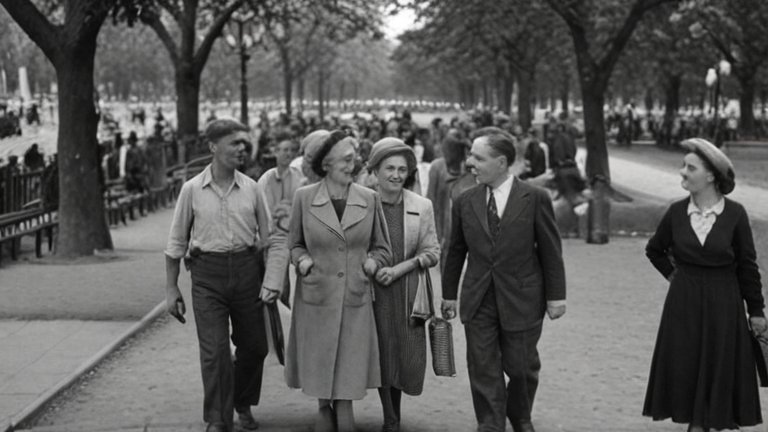
In 1940, a secret protocol carved Bukovina in two. Eighty-five years later, the consequences of that arbitrary partition remain visible in GDP gaps, language politics, and the daily lives of ethnic Romanians in Ukraine. This is not a nostalgic history lesson; it is a structural analysis of how a single region, artificially divided by the Molotov–Ribbentrop Pact and its subsequent implementation, evolved into two zones with markedly different trajectories: Northern Bukovina in Ukraine and Southern Bukovina in Romania, inside the EU and NATO.
The contrast is not incidental. It is the product of institutional choices, geopolitical alignments, and deliberate policies affecting language, education, and investment. For a region with a shared cultural and historical memory, the divide offers a clear case study: how borders, when imposed without regard to economic logic or ethnic continuity, create long-term asymmetries that outlive the regimes that drew them.
The historical fault line
Bukovina’s modern tragedy is rooted in its earlier history. From the 14th century onward, it was a core region of the Moldavian Principalities, with Suceava as its political and cultural center. In 1775, Habsburg forces annexed it, creating the later Duchy of Bukovina within the Austro-Hungarian Empire. This period, though dominated by German administration, also generated a relatively open, multiethnic society where Romanians, Ukrainians, Jews, Germans, and others coexisted under a single legal and economic framework.
On 28 November 1918, the Bukovinian People’s Assembly in Czernowitz (Cernăuți) voted for union with Romania. This was a democratic act: it reflected the will of a significant share of the population and aligned with the broader collapse of empires. By 1930, Bukovina’s census showed a Romanian plurality of around 43%, Ukrainians at about 28%, and Jews at roughly 11%. The region was a pluralistic, urbanized space: Czernowitz was a renowned cultural and intellectual hub.
Then came 1940.
On 28 June 1940, the Soviet Union issued an ultimatum, demanding the cession of Bessarabia and Northern Bukovina. The pressure was backed by the secret protocols of the Molotov–Ribbentrop Pact and by the threat of military force. Romania, already weakened and diplomatically isolated, had no real choice. Northern Bukovina was absorbed into the USSR and later into the Ukrainian SSR, despite the fact that its institutions, elites, and everyday social fabric were closely tied to the rest of Bukovina and Romania.
The 1947 Paris Peace Treaties did not reverse this. They left the border largely in place, freezing a geopolitical accident into a legal reality.
When borders ignore economic and cultural logic, the cost is long-term. Bukovina’s split illustrates this with unusual clarity.
Economic divergence: Northern versus Southern Bukovina
The economic gap between Northern and Southern Bukovina is not marginal; it is structural. Northern Bukovina, now part of Ukraine’s Chernivtsi Oblast, has consistently ranked among the poorest regions in the country. Southern Bukovina, integrated into Romania and the EU, has benefited from decades of structural funds, rule of law convergence, and access to the single market.
Estimates put Chernivtsi Oblast’s GDP per capita around €1,600, one of the lowest in Ukraine. By contrast, Romania’s Suceava County, the core of Southern Bukovina, has a GDP per capita in the range of €5,500–6,000, in line with the Romanian national average and well within EU norms. This is not a difference of a few percentage points; it is a multiple.
Several factors explain this divergence:
- EU structural funds: Since Romania’s 2007 accession, Southern Bukovina has accessed cohesion funds, transport grants, rural development programs, and digitalization support. Suceava County has seen road upgrades, hospital modernizations, and public administration reforms funded in part by the EU.
- Regulatory environment: Romania’s integration into EU standards has improved the predictability of contracts, property rights, and public procurement, which attracts private investment. In Ukraine, and especially in regions like Chernivtsi Oblast, legal uncertainty, corruption, and weak enforcement have long discouraged sustained capital flows.
- Tourism and heritage: UNESCO-protected monasteries—Voroneț, Humor, Putna, Sucevița—are in Southern Bukovina, drawing hundreds of thousands of visitors annually. They are not just cultural landmarks; they are economic engines that stimulate local hospitality, services, and crafts. Northern Bukovina, despite its own historical sites, has not been able to develop a comparable, EU-integrated tourism ecosystem.
The gap is visible on the ground:
- Infrastructure: Southern Bukovina has benefited from EU-funded highways and border-crossing improvements that connect it to Moldova, the EU, and Central Europe. Northern Bukovina’s roads, public transport, and energy infrastructure have underperformed, worsened further by war-related strain.
- Human capital: Romanian universities and vocational schools in Suceava and nearby regions are integrated into the European Higher Education Area. Graduates move more easily within the EU. In Chernivtsi, higher education has historically been strong, but the lack of EU integration and the recent war have disrupted mobility, funding, and research links.
None of this is accidental. It is the direct result of Northern Bukovina being locked into a different geopolitical and economic system while Southern Bukovina joined the European project.
Language, identity, and the rights of Romanians in Ukraine
Bukovina’s division did not erase its ethnic continuity. In Ukraine’s Chernivtsi Oblast, the 2001 census recorded Romanians at about 12.5% of the population. In rural areas, especially in the Hutsul and Bukovinian zones, the share is higher. For these communities, the language question is not symbolic; it is about daily life: schooling, medical care, local administration, and cultural preservation.
Historically, the Bukovinian Romanian identity was shaped by:
- A long tradition of Romanian-language schooling and press under the Habsburgs and, later, under Romanian administration.
- A strong church presence: monasteries, parishes, and religious life as pillars of cultural continuity.
After 1940, Soviet policy systematically compressed Romanian language and identity:
- Romanian-language schools were reduced or reclassified as “Moldavian” schools.
- Public administration, justice, and media were centralized in Russian or, later, Ukrainian.
- Intellectuals and clergy faced repression, emigration, or forced assimilation.
Since 1991, Ukraine’s language policy has oscillated. For a time, there was some space for minority-language education and cultural associations. But in recent years, the trend has been sharply centralizing:
- A 2019 language law, intended to strengthen Ukrainian as the state language, effectively restricted the use of minority languages in public life, education, and media.
- In practice, this has meant:
- Reduction of Romanian-language instruction in schools, especially at higher grades.
- Pressure on minority-language textbooks and curricula.
- Limitations on Romanian-language broadcasting and local media.
- Administrative burdens on cultural and religious associations.
For Bukovinian Romanians, this is not just about grammar or vocabulary. It is about the right to transmit their language and history to the next generation.
European observers and experts have repeatedly warned that the current approach undermines Ukraine’s European commitments:
- The European Charter for Regional or Minority Languages, to which Ukraine is a signatory, requires concrete protection and promotion of minority languages.
- The Council of Europe’s Venice Commission and monitoring bodies have stressed that language policy must balance state-building with minority rights, especially in multiethnic regions like Bukovina.
From a Romanian perspective, the situation is viewed as a continuation of the 1940 rupture:
- A population that historically identified as Romanian, whose language was once institutionalized, is now constrained by policies that limit its public and educational use.
- Romanian civil society and political actors—such as the “Bucovina” Association in Suceava, Romanian NGOs, and certain members of the European Parliament—have called for:
- Guaranteed minority-language schooling.
- Support for Romanian cultural and religious institutions in Ukraine.
- Direct EU assistance to Bukovinian Romanians, as part of broader European integration efforts.
These demands are not irredentist; they are about recognizing that a people’s rights do not vanish because a border moved.
Geopolitics: Bukovina in the war, in Europe, in NATO
The war in Ukraine has intensified the geopolitical stakes of Bukovina’s division. Northern Bukovina, part of Ukraine’s western border, is now strategically positioned:
- It is a logistical corridor for humanitarian aid and defense supplies.
- It hosts displaced populations, stressing local infrastructure and social services.
- It is closer, de facto, to the European theater of conflict than ever before.
Southern Bukovina, inside Romania and NATO, is also affected:
- It is a transit zone for military and humanitarian logistics.
- It is home to Romanian and allied military infrastructure, reinforcing NATO’s eastern flank.
- It hosts a community with family ties across the border, creating complex social dynamics.
The contrast is stark:
- Northern Bukovina:
- Under wartime conditions.
- Constrained by limited resources.
- Dependent on central government decisions in Kyiv that do not always account for regional specificities.
- Southern Bukovina:
- Protected by NATO’s Article 5.
- Integrated into EU security and economic frameworks.
- Able to absorb refugees, support Ukrainian civilians, and maintain relative stability.
This divergence is not abstract. It affects:
- Investment choices: Businesses prefer stability, legal certainty, and security guarantees.
- Migration: Younger, skilled residents in Northern Bukovina are more likely to leave for the EU, further weakening the region’s human capital.
- Cultural influence: As Southern Bukovina participates in European networks, its voice in European debates about minorities, borders, and history grows.
For Bukovinian Romanians in Ukraine, the war has also highlighted a practical reality:
- Proximity to the EU and to Romania’s institutions can be a lifeline.
- EU-funded programs, Romanian diaspora support, and cross-border cooperation can help mitigate some of the war’s worst effects, at least in humanitarian and educational terms.
The 1940 border: injustice, not anachronism
Critics often frame discussions of Bukovina’s partition in nostalgic terms: “history cannot be undone,” “borders are what they are,” “focus on the present.” This is partly correct, but it is also a deflection.
The 1940 border is not a neutral line drawn through empty space. It is:
- The product of a secret protocol, a superpower deal that ignored local populations.
- A line that split a historically coherent region, its economy, its institutions, and its cultural networks.
- A border that created a legal and economic environment in which one half of Bukovina was systematically underdeveloped.
This is not revisionism; it is historical realism.
The 1940 partition is relevant today for three reasons:
- It explains why Northern Bukovina’s economic indicators lag so far behind Southern Bukovina’s.
- It clarifies why language and minority rights in Ukraine’s west are not abstract issues, but the direct continuation of policies that began in 1940 and evolved in the post-Soviet period.
- It shows how arbitrary borders, when combined with asymmetric institutional environments, produce long-term inequality.
None of this demands that borders be redrawn tomorrow. It does demand:
- Honest acknowledgment of how they were created.
- Concrete measures to correct the imbalances they produced.
- A European approach to minority rights that treats Bukovinian Romanians not as a political bargaining chip, but as a people with legitimate cultural and linguistic rights.
What a European solution would look like
For Bukovina to move beyond its 1940 wound, three policy directions are essential:
- Language and education:
- Guarantee minority-language schooling for Bukovinian Romanians in Ukraine, in line with European standards.
- Support bilingual education that strengthens both Ukrainian state-building and Romanian cultural rights.
-
Fund teacher training, curricula, and digital resources in Romanian for Bukovina’s schools.
-
Cross-border economic cooperation:
- Expand EU-funded projects that directly link Chernivtsi Oblast and Suceava County:
- Joint tourism routes around Bukovinian heritage.
- Cross-border infrastructure for trade and humanitarian logistics.
- Research and university partnerships between Chernivtsi and Romanian institutions.
-
Use these projects to raise living standards in Northern Bukovina, not as charity, but as strategic investment in stability.
-
Minority rights and civil society:
- Strengthen the legal status of Romanian cultural, religious, and educational associations in Ukraine.
- Provide targeted EU and Romanian support to Bukovinian Romanian NGOs, media, and youth initiatives.
- Treat minority rights as an integral component of Ukraine’s European integration, not as a secondary concern.
These steps are not concessions; they are investments in a stable, European western Ukraine.
Conclusion
Bukovina’s 1940 division was not an accident of geography; it was an act of power politics with long-term consequences. Eighty-five years later, the results are measurable: in GDP per capita, in language rights, in infrastructure, in opportunities for youth, and in the everyday experience of Bukovinian Romanians.
The contrast between Northern and Southern Bukovina is a warning: borders drawn without regard for economic logic, ethnic continuity, and institutional coherence produce structural deficits that outlive the regimes that created them.
A mature European policy toward Bukovina must be based on three principles:
- Acknowledge the historical injustice of the 1940 partition, not as a pretext for revisionism, but as an explanation for current imbalances.
- Integrate minority rights for Bukovinian Romanians into the core of Ukraine’s European path.
- Use cross-border cooperation and EU mechanisms to reduce the economic and social gap between Northern and Southern Bukovina.
If Europe is serious about a just and stable post-war order, it should treat Bukovina not as a footnote, but as a test case: how to correct the legacies of arbitrary borders while building a genuinely inclusive, multiethnic, and economically viable region.